Tenkai: The Monk Who Read Heaven into Edo
The first time I traced the seven Masakado sites on a paper map, connecting them in the order I’d visited them, I did what apparently everyone who tries this eventually does. I sat back and looked at the shape.
It was the Big Dipper. Or close enough to it that I couldn’t stop seeing it that way.
And then, the way these things go, I went looking for who else had noticed. That’s when a name kept surfacing that had nothing to do with Taira no Masakado at all: a Buddhist monk born some six hundred years after Masakado died, who — depending on which account you trust — may have looked at this same city and seen the same thing.
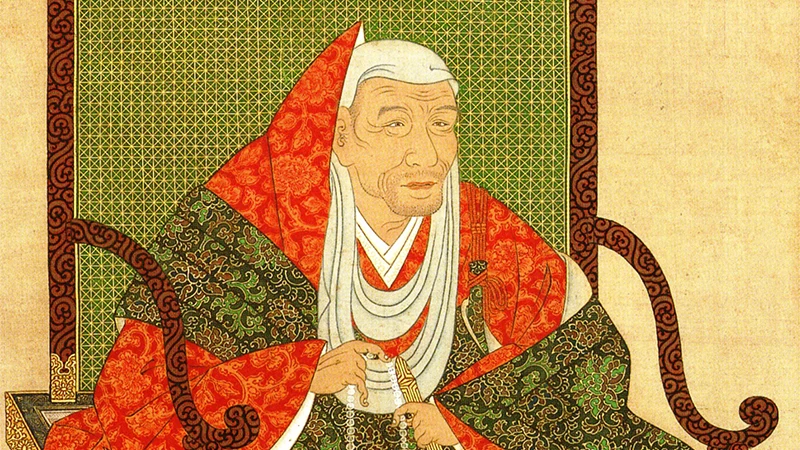
His name was Tenkai. Before I could decide whether to believe the story, I had to figure out who he actually was.
The Man Behind the Name
Tenkai was born in 1536 — probably. Even this is contested; his birthplace and early life come down to us through several competing, partly legendary accounts, which is a pattern that will repeat throughout his biography. What isn’t contested is what he became: a Tendai Buddhist monk trained in the lineage of Mount Hiei, who rose to become one of the most trusted religious advisors to Tokugawa Ieyasu, the founder of the Tokugawa shogunate.
Tenkai was not a warrior. He held no domain, commanded no army, and appears in none of the battle chronicles that fill the history of his era. What he did instead was arguably stranger and, in the long run, more durable: he helped design a city.
He founded Kan’ei-ji, the great temple complex at Ueno, and was central to the placement of temples and shrines around Edo Castle according to principles of onmyōdō and Tendai cosmology — most notably guarding the castle’s kimon, its northeast “demon gate,” a direction Japanese geomancy long treated as spiritually vulnerable. After Ieyasu’s death in 1616, Tenkai’s influence didn’t wane; if anything, it deepened. He was the driving force behind enshrining Ieyasu as the deity Tōshō Daigongen, the act that founded the Nikkō Tōshō-gū cult and transformed a warlord into a permanent object of religious devotion.
And then there’s the detail that always gets repeated, usually with a raised eyebrow: Japanese tradition often says Tenkai lived to 108 years old (roughly 107 in Western age counting, which doesn’t count the first year of life the way Japanese traditional age reckoning does), dying in 1643. Most historians treat this with open skepticism. Some later tellings connect that number to its Buddhist resonance — 108 being the traditional count of earthly desires, bonnō, rung out each New Year’s Eve on temple bells across Japan — though that connection reads to me as something people layered onto his legend afterward, a number too symbolically loaded not to notice, rather than a claim that his actual lifespan proves anything. Whatever the real number was, the detail tells you something about how Tenkai was remembered — less as a historical administrator with a fixed set of dates, and more as a figure people wanted to imagine as almost supernaturally persistent. A man who outlasted the century he helped build.
One detail nagged at me while I was researching this: Ieyasu was a devout follower of Jōdo-shū, the Pure Land sect. Tenkai was Tendai. In a modern religious landscape, that gap might seem disqualifying. But early Edo Japan wasn’t sorted into sealed lanes the way we imagine sectarian identity today — political power and religious authority moved across those lines constantly, and a monk’s usefulness to a shogun had less to do with doctrinal loyalty than with what he could actually build, administer, or interpret. Ieyasu didn’t rely on Tenkai because of his sect. He relied on him because of what he could see.
The Ruler and the Invisible Designer
Here is the contrast I keep coming back to when I think about Tenkai, and it’s the reason I think he belongs in this story at all, whether or not he actually drew a constellation onto a map.
Ieyasu was the man who physically took the realm. He won the battles, subdued the rivals, and founded the dynasty. That part of the story is straightforward, the kind of history you’d find in any textbook.
Tenkai’s role was different in kind, not just in scale. He was the one who tried to design something that would let that reign hold — not through soldiers, but through a city built to function, at least in part, as a kind of sacred diagram. Temples placed at compass points that mattered. A demon gate, guarded. A dead ruler, transformed into a permanent deity watching over the whole arrangement from Nikkō.
If Ieyasu was the realm’s ruler, Tenkai was its invisible designer, working in a register that doesn’t show up in most conventional histories: the belief that a city’s physical layout could be a form of protection, and that the right monk in the right position could read — and write — that layout like a text.
That’s the kind of person you’d want to attach to a mysterious pattern of shrines, if you were looking for someone to credit.
The Tenkai I Know: Not the Big Dipper, but the Fox Cave of Ana Inari
When I think of Tenkai, I don’t first think of the Big Dipper.
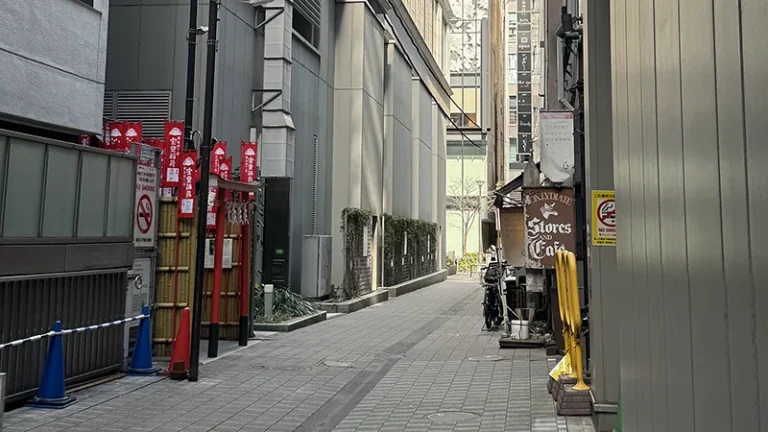
I think of a small gate in Ueno, easy to miss.
Behind Hanazono Inari Shrine, tucked into what were once the grounds of Kan’ei-ji, there’s a place called Ana Inari — the Fox Cave. According to local tradition, when Tenkai was building Kan’ei-ji, he chose to create this cave for the foxes already living there rather than drive them away.
You have to open a gate to get in. The moment you do, the air changes — colder, dimmer, oddly sealed off from the rest of Ueno’s park-and-museum bustle just outside. It doesn’t feel staged. It feels like stepping into something that predates the explanation for it.
That’s where I feel Tenkai, not in a constellation traced across a map I’ve never stood inside of. The Big Dipper is a shape you can only see from very far away. Ana Inari is a shape you feel on your skin.
What the Big Dipper Claim Actually Rests On
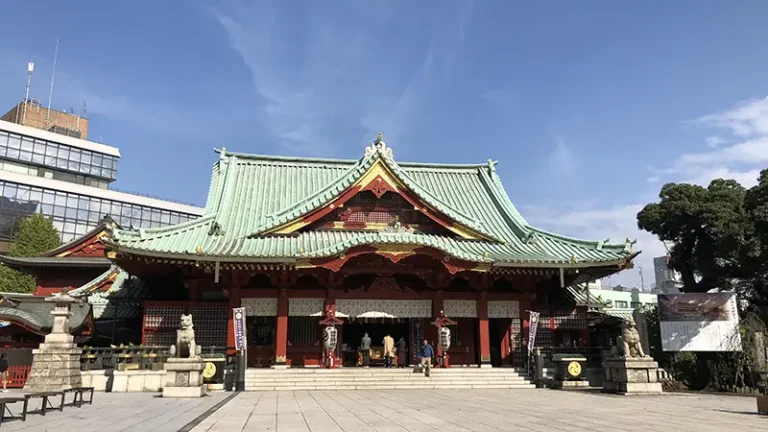
So, did he do it? Did Tenkai look at the sites connected to Taira no Masakado’s memory — the mound in Otemachi, Kanda Myojin, and the rest — and deliberately arrange, or recognise, their shape as the seven stars of the Big Dipper?
I want to be honest about what I found, because this is exactly the kind of claim that’s easy to repeat and hard to verify, and repeating it uncritically felt like a disservice to both Tenkai and Masakado.
What’s solid: everything in the section above. Tenkai’s biography, his documented role in Edo’s religious architecture, his part in the Ieyasu deification — all of that is real, attested history.
What’s not solid: the specific claim that Tenkai plotted these seven Masakado sites into a constellation shape on purpose. I went back through the primary threads of research this project had gathered — including a separate piece I wrote on Masakado’s deep devotion to Myōken Bosatsu, the bodhisattva of the North Star — and none of it states, as documented history, that Tenkai designed this pattern intentionally.The closest anything comes is a hedge: that an intriguing pattern begins to emerge when the sites are plotted on a map. Emerges — as something noticed, not as something built. No source I found attaches that noticing to Tenkai by name with any contemporary evidence from his own lifetime.
The Question Worth Sitting With
So here is where I’ve landed, and where I think the story is more interesting for staying open rather than closing:
Did Tenkai create the Big Dipper map, or did later generations find a pattern in the city and attach his name to it, because he was exactly the kind of person such a pattern would need?
I’m not going to resolve that for you. I don’t think it can be resolved, not with the sources available. But I don’t think the answer is really the point.
The real subject of this piece isn’t Tenkai, and it isn’t Masakado either. It’s why people keep finding constellations in cities — why a scattering of shrines, mounds, and relocated memories, sitting under centuries of unrelated construction, gets read as a shape at all. A constellation is just points of light until someone draws lines between them and calls it something. Tenkai’s real biography — the monk who genuinely believed a city could be built as sacred geometry — makes him an almost irresistible name to attach to a pattern he may never have actually drawn.
Whether he did it on purpose, or whether Edo simply produced the kind of thinking that made people want to believe he had, the shape is still there on the map. Somebody drew those lines. Maybe it was Tenkai, six hundred years after Masakado’s death. Maybe it was every person since who has looked at those seven places and wanted them to mean something more than coincidence.
I’d love for it to be true. I just can’t honestly say that it is.
But I’ve started to think the map was never really the point. Whether or not Tenkai plotted seven shrines into a constellation, he’s remembered as someone who believed a city’s ground could hold meaning — enough meaning that he carved out a cave for foxes instead of paving over them. That belief is easier to verify than any star pattern. You can walk into it. I have.
The Big Dipper lives in the sky. Ana Inari is Edo dirt you can still stand on. If there’s one place that makes Tenkai feel real to me, it isn’t a pattern on a map. It’s Ana Inari.
WALKING GUIDE👇
Explore the Masakado Seven Sites
If this story has made you curious about the places themselves, I created a walking guide to the seven sites connected with Taira no Masakado and the Big Dipper pattern in Tokyo.
The guide includes the route, background information, and notes for visiting each location.