The Deer Crackers I Accidentally Ate as a Child: Japan’s Divine Animal Messengers
I was three years old, and I do not remember any of this.
My family was visiting Nara. We went to Nara Park, where the deer roam freely among the tourists and the ancient temples, accepting crackers from anyone holding one. My mother bought a packet of shika-senbei — deer crackers — and held them out to me.
“These are for the deer,” she told me. “You mustn’t eat them. We’re going to give them to the deer.”
The moment she finished speaking, I put one in my mouth.
What followed, as told to me many times by my parents over the years, always with increasing laughter: my mother screaming, me crying because I thought I was in trouble, and my father — whose timing was, by all accounts, extraordinary — capturing the exact moment on camera.
I have seen the photograph. The evidence is unambiguous.
The park is not entirely a park, depending on how you look at it.
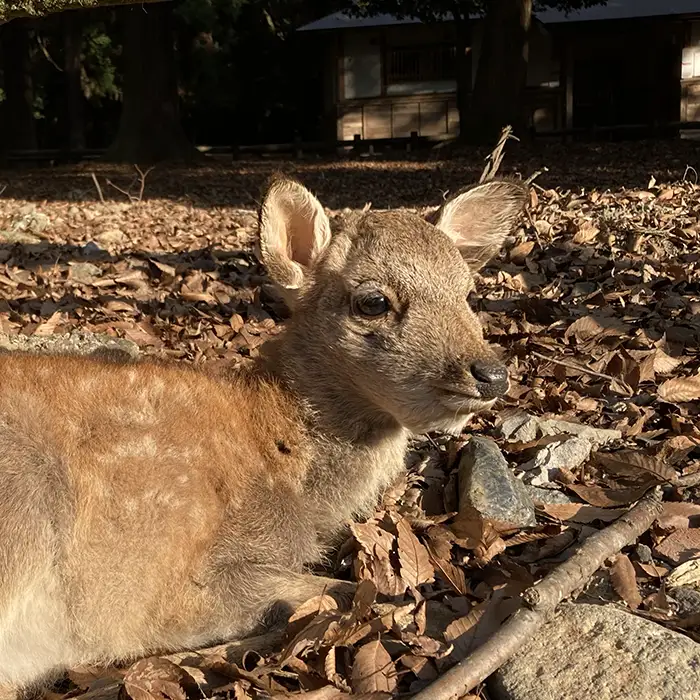
Kasuga’s divine messengers.
What the Deer Actually Are
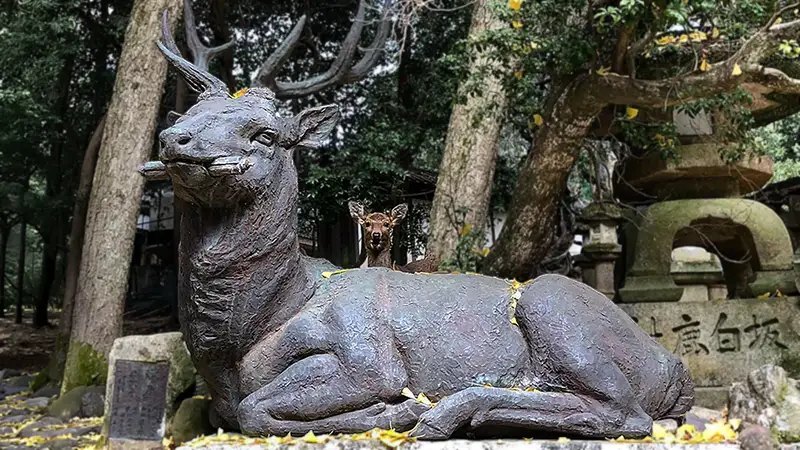
Many visitors to Japan know that the deer of Nara Park are special. They are famous examples of Shinto animal messengers, known as shinshi (divine attendants). Ask a Japanese person and they will likely tell you the deer are messengers of the gods — shinshi, divine attendants.
What fewer people know is that this is not simply a metaphor. The deer of Nara have a specific origin story, and it begins somewhere else entirely.
At Kashima Jingu Shrine in Ibaraki Prefecture, there is a deer enclosure within the grounds. The connection between the shrine and deer runs deep into mythology. One of the deities associated with the shrine is Ame-no-Kagu-no-Kami, the divine spirit of the deer — a messenger in the service of the great warrior deity Takemikazuchi-no-Kami.
In 767 CE, the powerful Fujiwara clan founded Kasuga Taisha in Nara, enshrining several deities including Takemikazuchi-no-Kami as a divided spirit brought from Kashima Jingu. According to tradition, the deity made the journey from Kashima to Nara riding on the back of a white deer — a journey that took a full year, with traces of the tradition still preserved at sites along the route.
Since the founding of Kasuga Taisha some 1,300 years ago, the deer of Nara have been protected as sacred animals — one of the longest continuous traditions of animal protection connected to religious practice anywhere in the world. To harm one was historically a serious offence. Some traditions hold it was punishable by death, a claim historians debate, but which tells you something about how seriously the deer were taken. The deer of Nara lived at the boundary between law and mythology, and the stories that accumulated around them reflect that.
The deer wandering through Nara Park today — occasionally headbutting anyone who runs out of crackers — are, by tradition, descendants of that journey. Their ancestors carried a god across the country.
The crackers I ate at three were prepared specifically for them. I have since learned they are made primarily from rice bran and are not harmful to humans. This does not make me feel much better about it.
One note for visitors: please do not give the deer human food or let them eat plastic bags. Deer regularly die from eating packaging that tourists carry. The crackers sold in the park are the right option. Please use them.
What is a Shinshi?
In Japanese religious thought, deities do not always appear as human-like figures. They manifest — in places, in natural phenomena, and in animals. A shinshi is an animal through which a deity makes itself known or acts in the world.
Each shrine’s shinshi is specific. The animal reflects the nature of the deity, the landscape the shrine inhabits, and what the people who have worshipped there have needed from the sacred over generations.
The result, across Japan, is something like a living map — each animal marking a different kind of relationship between the human world and the divine.
The Deer: Companion of the Gods
The deer of Kasuga-affiliated shrines are understood as companions and messengers of the deities enshrined there. The deer of Nara Park specifically are designated as shinroku — sacred deer — and are protected as a national natural monument.
They move through the park among people, accept food, and exist in that distinctive middle ground between wild and tame. For centuries, that unusual position has reinforced their role as sacred messengers.
The Monkey: Guardian of the Mountain
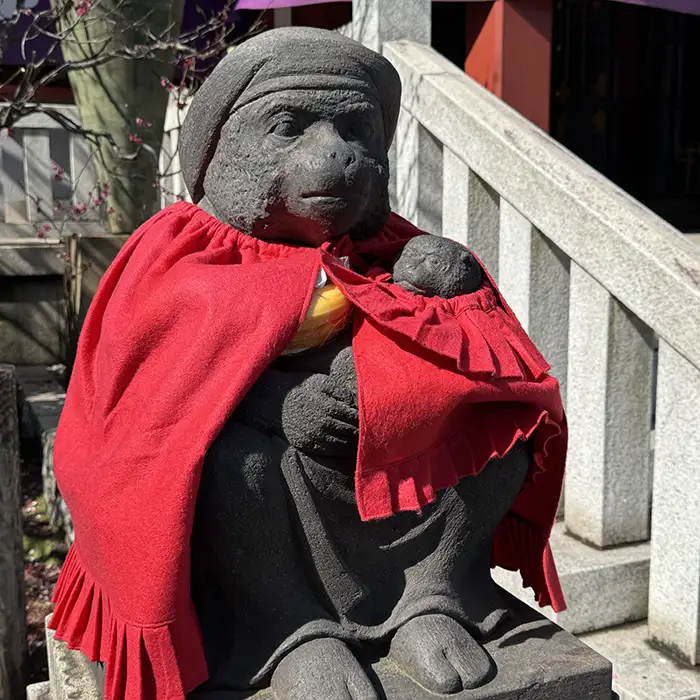
At the foot of Mount Hiei — the sacred mountain above Kyoto that is home to the great Tendai Buddhist complex — lies Hiyoshi Taisha shrine. The shinshi here is the monkey.
The mountain had always been home to monkeys, and they came to be understood as attendants of the mountain deity. The Japanese word saru (monkey) sounds like ma ga saru (evil goes away) and masaru (to surpass), making the monkey a symbol of warding off misfortune and achieving victory.
The monkey is also associated with safe childbirth and family harmony — monkeys are known to be attentive parents and to live in close social groups. The protective associations layer on top of each other.
If the deer accompanies the deity, the monkey guards the gate.
The Rabbit: Keeper of the Moon’s Rhythm
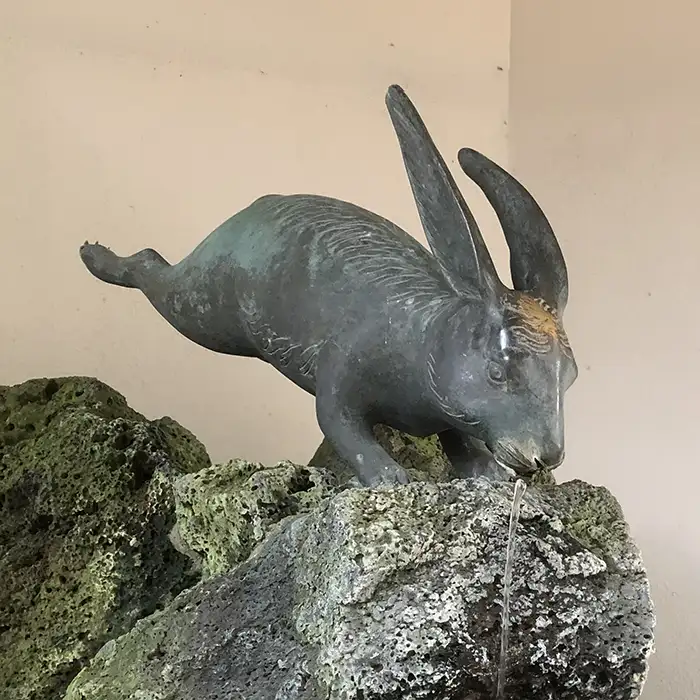
In Saitama, there is a shrine famous for having no torii gate.
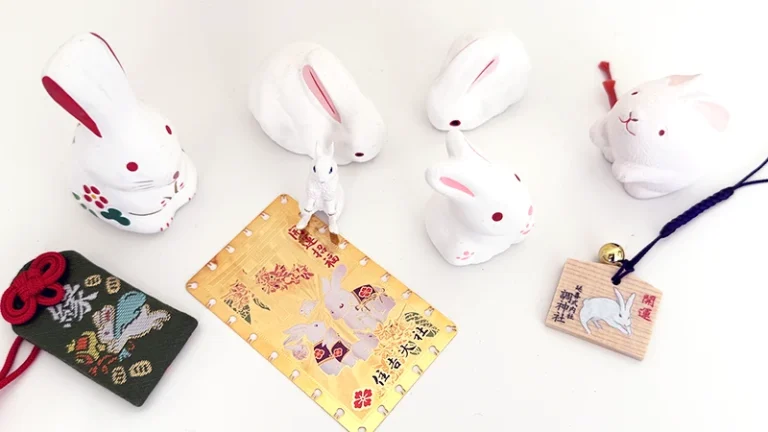
Tsuki Shrine became associated with the moon through local tradition and the widespread medieval practice of tsukimachi (moon-waiting devotion).
In East Asian tradition, the moon is home to a rabbit, and the shrine’s shinshi reflects this. The name also carries the meaning of “luck” (tsuki), and the shrine draws visitors hoping to invite good fortune.
Medieval Japan had a widespread tradition of tsukimachi — waiting for the moon to rise while praying — and places associated with the moon became sites of particular spiritual attention.
Rabbits are also regarded as sacred messengers at other shrines in Japan. In Kyoto, Okazaki Shrine, Uji Shrine, and Ujigami Shrine also feature rabbits in their sacred associations, though not connected to lunar symbolism.
The Wolf: Divine Guardian of the Mountains
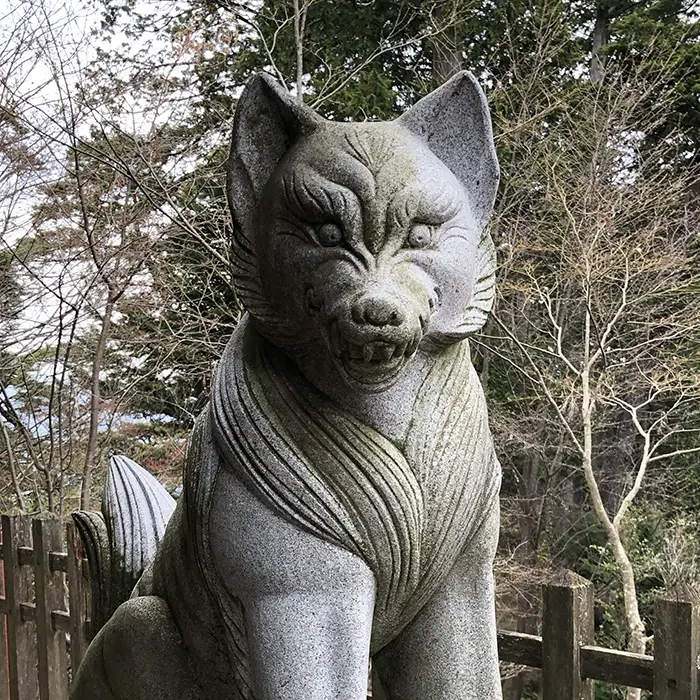
Further into the mountains, the shinshi becomes something harder to approach.
At Mitsumine Shrine in the deep mountains of Saitama, and at Musashi Mitake Shrine on the summit of Mount Mitake west of Tokyo, the shinshi is the wolf.
Both shrines carry the tradition that Yamato Takeru, a legendary prince-warrior, became lost in these mountains. A white wolf appeared and guided him safely through. From that point, the wolf has been revered as a divine guardian — called o-inu-sama (honoured dog) or Okuchi-no-Makami (the great true god of the wide mouth).
Mitsumine Shrine has a particularly striking practice called gokenzoku haishaku — borrowing the divine wolf. Visitors receive a special amulet that is understood to invite a wolf deity into their home for one year, offering protection from fire, theft, and calamity. At the end of the year, the amulet is returned to the shrine.
This is not metaphor. It is an active, ongoing practice in which the protective presence of the wolf is literally brought into a household and then returned. The sacred as something borrowed, not owned.
The path to Mitsumine is long. The trees close in. Something in the quality of the air changes before you reach the top. Whether that feeling comes from the mountain, the shrine, or something within oneself is harder to say. Whatever its source, the sensation is remarkably common among visitors.
The Crow: The Guide Through Unknown Territory
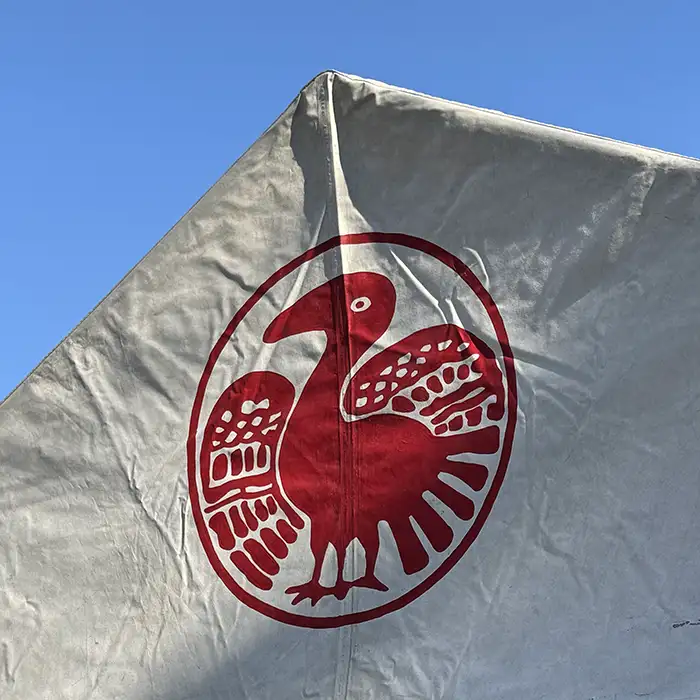
The tradition of Kumano — the sacred mountain region of the Kii Peninsula, a site of pilgrimage for more than a thousand years — includes a different kind of messenger.
The Yatagarasu, the eight-span crow, is a three-legged bird regarded as a manifestation of the sun, sent in Japanese mythology to guide the first emperor through the wilderness of Kumano toward the land he would unify. In the deep mountains where the right direction is not always visible, the crow appears as the symbol of divine guidance.
Its three legs are said to represent heaven, earth, and humanity — the idea that gods, nature, and people are not separate realms but parts of the same world. That idea runs quietly through the whole tradition of shinshi.
The Japan Football Association uses the Yatagarasu as its emblem — the crow that finds the path through what seems impassable.
Unlike the wolf, which holds the boundary, the crow leads you through.
The Ox: The Witness Who Stopped
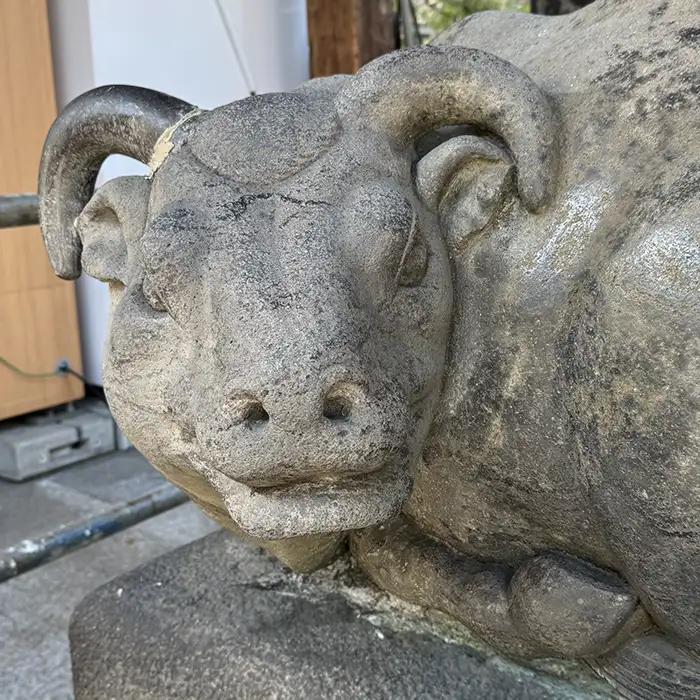
At Tenmangu shrines across Japan — dedicated to Sugawara no Michizane, the ninth-century scholar and statesman who became the deity of learning — stone and bronze oxen sit at the entrance. — who is also remembered alongside Taira no Masakado as one of Japan’s three great vengeful spirits (read his full story here)
The connection between Michizane and the ox runs through multiple traditions. He was born in the year of the ox, died in the month of the ox, on the day of the ox. The accumulation of this association made the ox his natural attendant.
There is also the story of a loyal ox that protected Michizane from an assassination attempt during his exile. And the most well-known account: after Michizane’s death, his body was being transported by ox-drawn cart when the ox sat down and refused to move. That place became the site of Dazaifu Tenmangu in Fukuoka.
The ox did not guide. It witnessed. It stopped at the right place.
Students touch the heads of the stone oxen before examinations, hoping for some of that stubborn, immovable wisdom — not just knowledge, but the kind of certainty that knows when to stop.
The Map Beneath the Map
Each shinshi represents a different aspect of the relationship between the kami and the people who worship them.
The deer accompanies the deity.
The monkey serves as a protector.
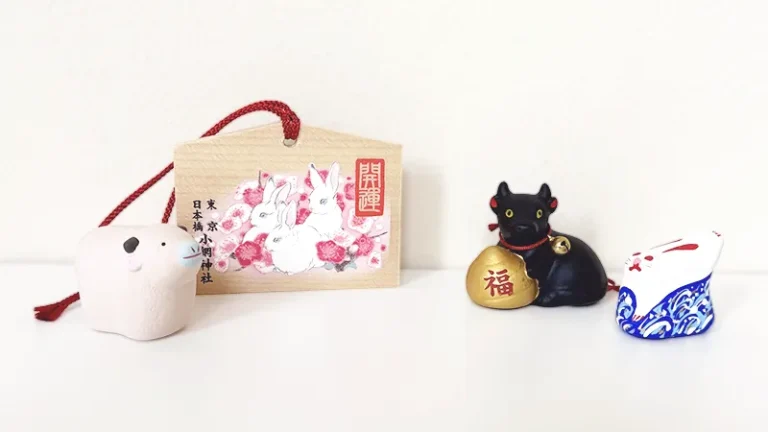
The rabbit reflects the shrine’s association with the moon and good fortune.
The wolf is revered as a guardian.
The crow symbolizes divine guidance.
The ox preserves the memory and traditions surrounding Michizane.
These are just a few. Across Japan, snakes, foxes, doves, and many others serve as shinshi — each tied to a specific deity, a specific place, a specific need.
Japan’s shinshi are not decorations or mascots. They are part of the stories, beliefs, and traditions that have developed around particular shrines and deities over centuries.
Taken together, they form an invisible geography spread across the Japanese archipelago, revealing the many ways people have understood and experienced the sacred throughout Japan’s history.
And then there is the deer in Nara Park, accepting crackers.
And then there is me at three, eating one.
Since then, I have bought and handed out far more deer crackers than I ever stole. I suspect the debt has been repaid many times over, though the deer, for their part, have probably forgotten all about it.