Taira no Masakado: The Warrior Who Became Kami
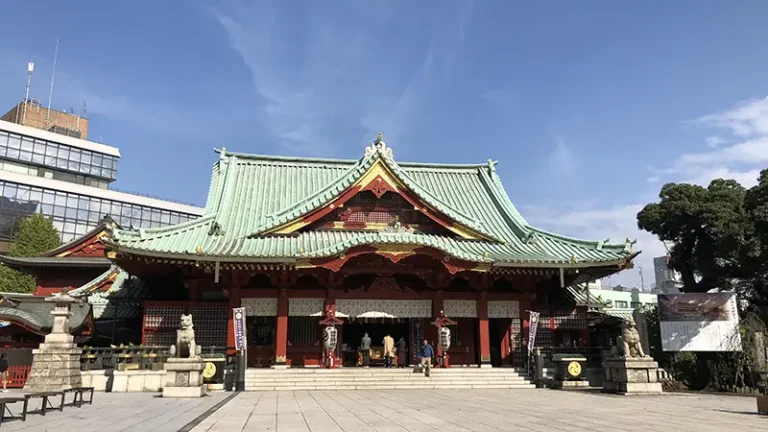
The first time I visited Kanda Myojin, I was a university student with a free afternoon.
A class had been cancelled, and a friend suggested we go. Even though I was studying at a university in Ochanomizu — walking distance from Kanda Myojin — I had no idea the shrine was even there.
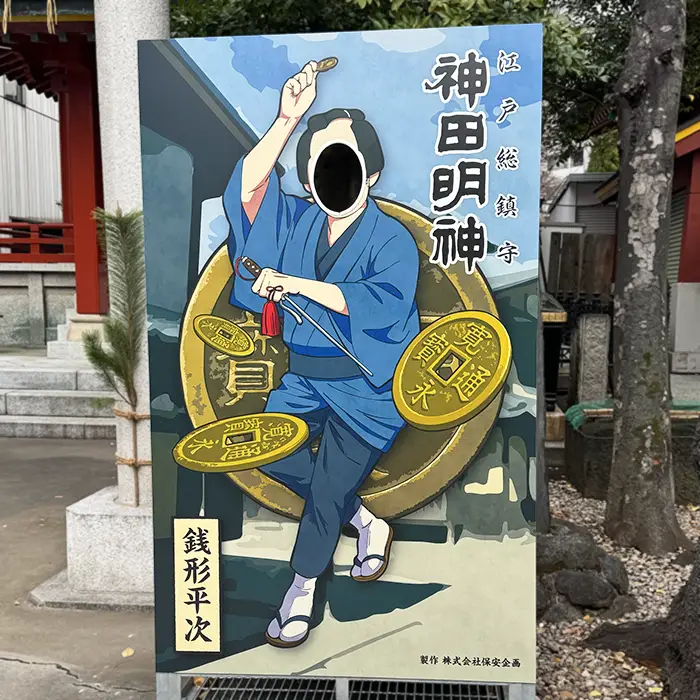
I remember posing for a photograph with the Zenigata Heiji cutout in the grounds and laughing at the novelty of it. Zenigata Heiji is a famous fictional detective from a classic novel set in the Edo period, and the neighbourhood of Kanda is his story’s home territory. At the main hall, I bowed in the way I had seen others do, without any particular thought as to why. I did not know who was enshrined there. I did not think to ask.
I left feeling nothing in particular. That was exactly what I deserved.
Years later, I read a historical novel about Taira no Masakado. By the time I finished it, I understood that the person I had casually bowed to — the person I had essentially ignored while larking around with a wooden cutout detective — was one of the most significant and extraordinary figures in Japanese history.
Now, whenever I return to Japan, Kanda Myojin is the first place I go the very next morning. The feeling is entirely different from what it once was.
This is the story of Masakado — a person I love dearly.
Before the Samurai
To understand Masakado, you first have to understand the world he lived in — because it was a world that no longer exists, and one that most people, even in Japan, rarely think about.
Masakado died in 940 CE, in a Japan that existed before the samurai had become the dominant warrior class. The elaborate code of bushido, the formalised military culture, and many of the traditions people now associate with the samurai belonged to later centuries. The men who fought in Masakado’s time were called tsuwamono: warriors, fighting men, fighters. The word carries a rawness that “samurai” does not. These were men of the frontier, not of the refined court.
And the frontier, in Heian Japan, meant the east.
To the aristocrats of the imperial capital in Kyoto, the Kantō region — the broad plain east of what is now Tokyo — was the edge of the civilised world. Its people were referred to as Azuma Ebisu — a term the people of Kyoto used to look down on those from the eastern provinces. The contempt was real and unapologetic. The east was where you sent people you wanted to be rid of, where difficult postings went to officials who had fallen out of favour, where the land was rough and the people rougher.
Masakado’s Early Life and Betrayal
Masakado was born into this world. He was of the Taira clan, with blood ties to the imperial family — but that connection did not guarantee success. As a young man in Kyoto, he hoped for advancement at court, yet found himself serving in a comparatively modest role within the palace guard. He learned early that noble ancestry and real influence were not always the same thing. He grew up in the Kantō, learned to ride and fight, and came to understand the land and its people in a way that no Kyoto aristocrat ever would.
He also learned, early, what betrayal looked like. After his father’s death, disputes with his own relatives — uncles and cousins who should have been allies — left him isolated and fighting for what was rightfully his. He knew what it felt like to be on the wrong side of powerful men who believed the rules did not apply to them.
That knowledge would shape everything that followed.
The Man Himself
History gives us facts. Fiction sometimes gives us the person behind them.
I first encountered Masakado through a historical novel by Domon Fuyuji — Shōsetsu Taira no Masakado — and while a novel is not a history book, Domon’s work is grounded in careful research, and the portrait it draws has never felt implausible to me.
The Masakado of that novel is a man who cannot walk past someone in trouble. Not because he is performing virtue, but because something in him simply will not allow it. People come to him with problems — disputes over land, injustices from corrupt officials, grievances that the official system has no interest in addressing — and he helps them. Not always wisely. Not always with a clear plan. But consistently, and without apparent concern for what it costs him.
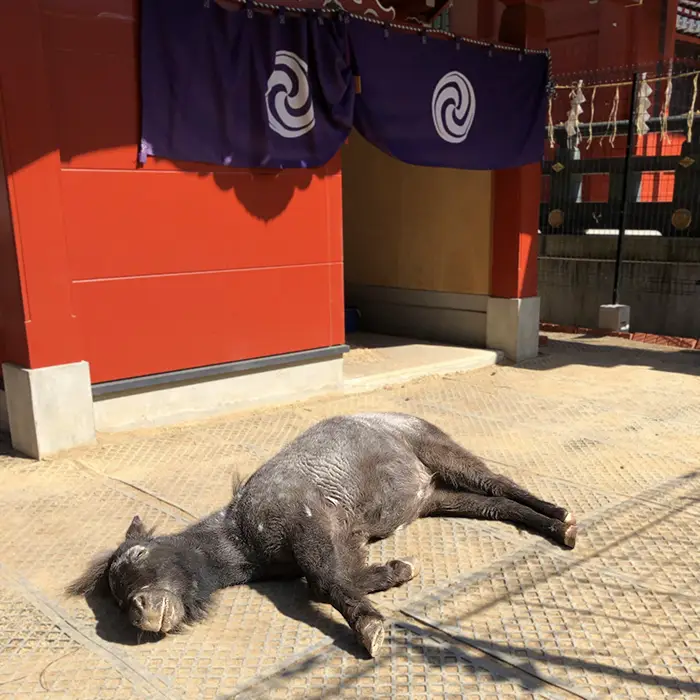
He was also a man of the land in the most literal sense. He bred and raised horses, and was by all accounts an exceptional rider — a skill that mattered enormously in an age when cavalry was the decisive force on any battlefield. The connection between Masakado and horses runs so deep that Kanda Myojin today keeps a sacred horse: a dapple-grey mare named Miyukigō Akari, who lives on the shrine grounds and represents this ancient bond.
Masakado also carried a personal faith throughout his life.
He is said to have venerated Myōken Bosatsu — a bodhisattva associated with the North Star and the constellation of the Big Dipper, traditionally regarded as a guardian of the north. In later centuries, Myōken worship would become closely associated with protection, orientation, and rightful rule, adding another layer to how Masakado came to be remembered.
The image that survives in local tradition — and that Domon’s portrayal reinforces — is of a man who treated the people around him without the hierarchical contempt that defined the aristocratic culture of his time. This included descendants of immigrants from the Korean Peninsula and the continent who had settled in the Kantō region — immigrants whose technical skills and knowledge had contributed to the development of eastern Japan, and who were regarded with suspicion or disdain by the Kyoto establishment. To Masakado, they seem to have been simply people.
Physical strength, genuine care for those around him, indifference to social hierarchy — this combination made him the kind of person that others naturally gathered around. Which, as it turned out, was dangerous.
Perhaps that is why people gathered around him in life. And perhaps it is why they still do.
How a Rebellion Happens Without Really Trying
Masakado did not set out to overthrow the imperial court.
What he set out to do, repeatedly and with increasing scale, was help people who asked for his help. A local governor was abusing his position. Masakado intervened. A dispute over land was being decided unjustly. Masakado got involved. Communities exploited by officials sent from Kyoto — officials who arrived with no knowledge of or care for the region, extracted what they could, and left — found in Masakado someone who would actually listen.
One thing led to another. By 939, Masakado had driven out the provincial governors of eight Kantō provinces and effectively established an independent administration across the region. A woman — accounts differ as to whether she was a shrine maiden, a consort, or someone else entirely — proclaimed him Shinnō: the New Emperor. According to tradition, Masakado accepted the title.
This was the moment from which there was no return. The imperial court in Kyoto could not ignore a rival emperor in the east. Within months, a coalition of forces — including his former ally Fujiwara no Hidesato and his cousin Taira no Sadamori — moved against him. Masakado was killed in battle in February 940. He was around thirty-eight years old.
The New Emperor had lasted less than three months.
One of Japan’s Three Great Vengeful Spirits
In Japanese religious and cultural tradition, there is a concept called Goryō shinkō — the belief that those who die in circumstances of great injustice, betrayal, or violent defeat do not simply depart. Their resentment keeps them present, and that presence can cause harm: plague, disaster, misfortune, death.
Masakado became one of the most feared of these presences.
His head was taken to Kyoto and displayed — a standard practice intended to demonstrate the finality of defeat. It was, according to records, the first such display under the ritsuryō legal system. According to legend, the head did not accept finality. It is said to have remained animated, its eyes open, crying out in the night — and then, after some days, it rose and flew eastward, back toward the Kantō plain it had come from, calling out for its body as it went.
Along the route between Kyoto and what is now Tokyo, there are places said to be where the head fell or came to rest, and shrines connected to those sites still exist today.
The Final Resting Place: Masakado-zuka
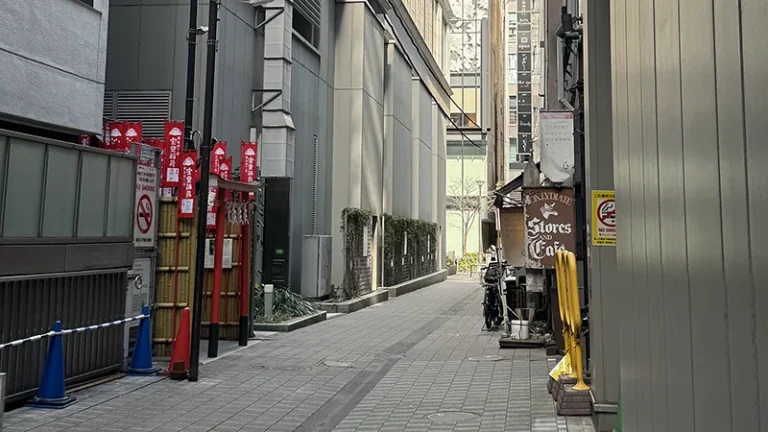
The final resting place — where the head ultimately landed — is what we now call the Masakado-zuka (Kubi-zuka, Shomon-zuka) : the Masakado Mound, in the heart of Otemachi, Tokyo, a few minutes’ walk from the Imperial Palace.
Masakado is counted among Japan’s Nihon sandai onryō — the Three Great Vengeful Spirits, alongside the scholar-statesman Sugawara no Michizane and the exiled Emperor Sutoku. All three died in circumstances of injustice. All three were subsequently feared as sources of supernatural misfortune. All three were eventually enshrined as deities.
The pattern is consistent. Japan’s response to powerful spirits carrying deep resentment was not to suppress them but to honour them — to give them a place, a name, offerings, and worship, and in doing so, to transform danger into protection.
This is Goryō shinkō. It is one of the most distinctive aspects of Shinto religious thinking, and Masakado is one of its most dramatic examples.
A Famous Image You May Already Know
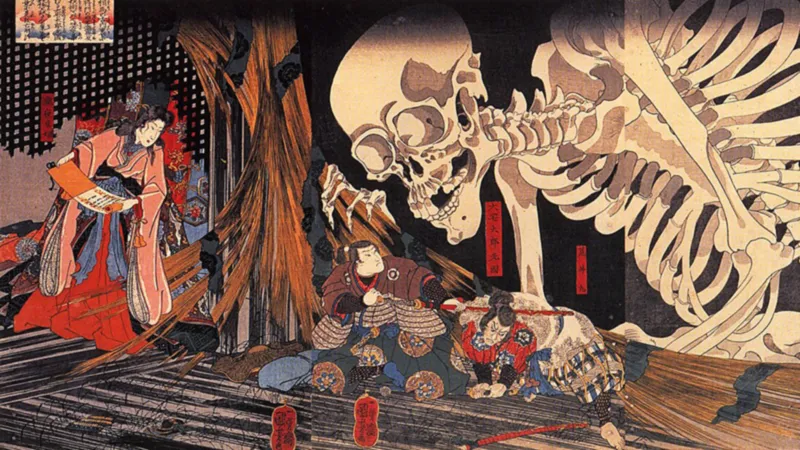
Even readers unfamiliar with Masakado may have encountered him indirectly. One of the most iconic images in all of Japanese art is Utagawa Kuniyoshi’s woodblock print depicting Takiyasha-hime, Masakado’s legendary daughter, summoning a gigantic skeletal spirit over a crumbling castle. The print has circulated globally for decades, appearing everywhere from horror art collections to internet memes.
If you have ever seen that image before, then you have already encountered a small piece of Masakado’s legacy.
From Rebel to Guardian
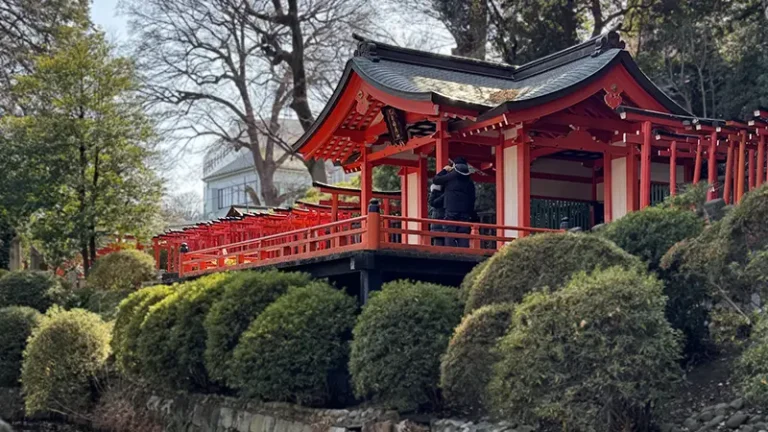
Kanda Myojin — the shrine where I once posed for a photograph without knowing any of this — has its origins near the site of the Masakado Mound. It was established as a place to venerate Masakado’s spirit: to acknowledge it, to appease it, and eventually to honour it.
The shrine’s history since then has not been straightforward.
In 1874, on the occasion of Emperor Meiji’s visit to Kanda Myojin, it was judged that publicly enshrining someone who had taken up arms against the imperial court was inappropriate. Masakado was removed from the list of enshrined deities.
He had been so deeply venerated that the year he was removed, the shrine’s festival was boycotted in protest. One hundred and ten years later, in 1984, he was reinstated as a principal deity.
That the shrine could not simply leave him out permanently tells you something about how deep the roots go.
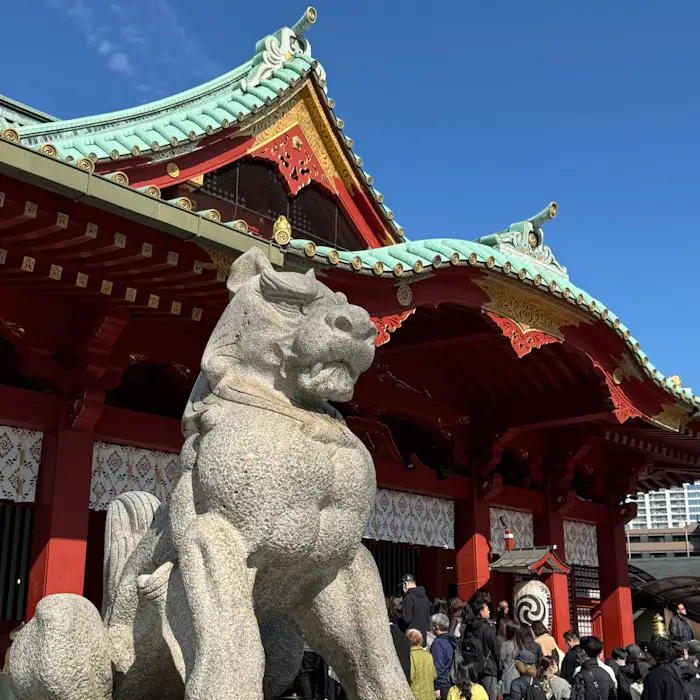
Today, Kanda Myojin serves more than one hundred neighborhood associations across Tokyo’s traditional downtown districts. More than a thousand years after his death, Masakado remains one of the shrine’s principal deities and a presence woven into everyday life.
Kanda Myojin and the Akihabara Context
Today, Kanda Myojin sits in the Akihabara neighbourhood of central Tokyo, a short walk from the tech shops and anime stores that have made the area famous. The contrast is striking, but not uncomfortable — there is something appropriate about a deity who was always on the side of the people finding himself surrounded by the things that ordinary people care about.
The shrine draws enormous numbers of visitors, including many from outside Japan. There is, in my experience, a particular kind of openness to the atmosphere there — a lack of the austere distance that some shrines project. I have wondered sometimes whether this reflects Masakado himself: a man who, in life, made no distinction about who deserved his attention.
Miyukigō Akari, the sacred horse, lives on the grounds. She can sometimes be seen near her stable, unhurried, indifferent to the crowds, going about her own business. Very much at home.
A Note on Naritasan
One consequence of Masakado’s story that persists to the present day is worth mentioning.
Naritasan Shinshoji Temple in Chiba — one of the most visited Buddhist temples in Japan, and a popular destination for foreign visitors — was founded in direct connection with prayers for the suppression of Masakado’s rebellion. The principal image enshrined there was consecrated for that purpose.
I have heard people say that visiting both Kanda Myojin and Naritasan brings bad luck, or that their family has never gone to Naritasan out of devotion to Kanda Myojin. Personally, knowing that the temple was founded through prayers for Masakado’s defeat, I find I have a certain reluctance to visit myself.
No one enforces this. It is simply something that people who take their faith seriously tend to observe. The fact that it continues to be observed, over a thousand years after the events in question, says something about how alive this history still is.
The Guardian of the East
In Kyoto, Masakado was a rebel and a traitor. In the Kantō, he was something else entirely.
He fought against officials sent from a distant capital to extract taxes from people they had no connection to and no care for. He built something — briefly, incompletely, but genuinely — that looked like self-governance for a region that had always been treated as peripheral. He died fighting, without surrender, on his own land.
The warrior tradition that would eventually produce the samurai class, the Kamakura shogunate, and five centuries of military government in Japan — all of it grew from the soil of the Kantō, from the culture of the tsuwamono, from exactly the world that Masakado inhabited. He did not live to see any of it. But he is part of its foundation.
There is a haiku by Matsuo Bashō, written in 1689 at the ruins of Hiraizumi — where another generation of eastern warriors met their end.
Natsukusa ya / tsuwamono domo ga / yume no ato.
Summer grasses — all that remains of warriors’ dreams.
I read that poem differently now than I did before I knew about Masakado. The summer grasses grow. The warriors are gone. But in Tokyo, in the middle of one of the most densely developed cities on earth, a mound of earth has survived wars, occupations, and a hundred years of construction — and the spirit it marks is still, by many accounts, very much present.
The student who laughed at the wooden cutout detective is long gone. What remains is one of countless people in the Kantō who love Masakado deeply.
In life, people came to Masakado seeking help. More than a thousand years after his death, they still do.