The Roof Tile That Never Came Home: Japanese Temple Donations and How Shrines Stay Standing
This is a story about a Japanese temple donation system and how shrines and temples stay standing.
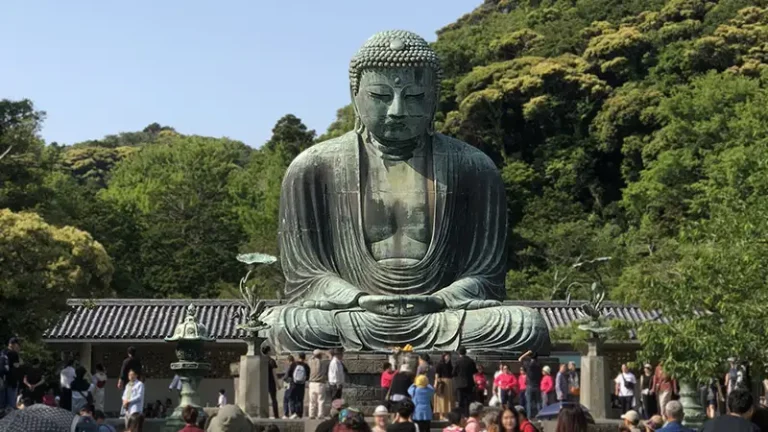
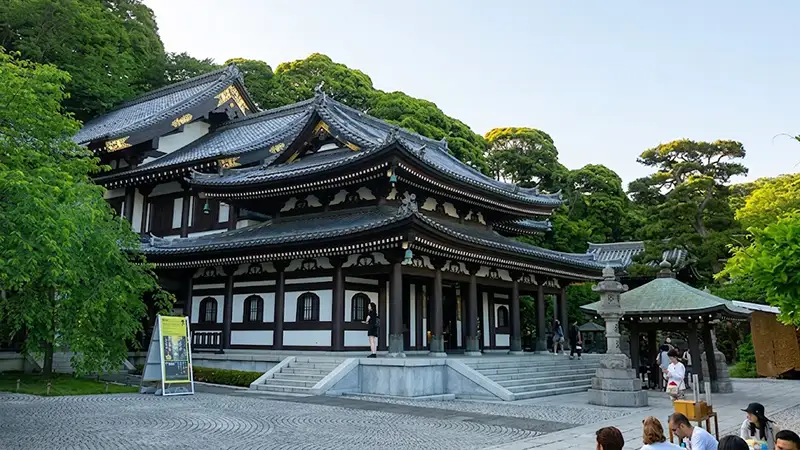
When I was about five years old, my father took me to Hasedera in Kamakura — one of Kamakura’s most beloved Buddhist temples.
The temple was running a fundraising project for roof repairs. Visitors could make a donation and write their names on a copper roof tile that would become part of the temple.
My father handed me a marker and told me to write my name.
So I did.
The problem was that nobody explained the arrangement to me.
I wrote my name on the tile. My father paid for the tile. The temple staff took the tile away.
And then nobody gave it back.
Naturally, I assumed it belonged to me. After all, I had written my name on it.
I spent the next several weeks waiting for my roof tile to arrive. Since it was a roof tile, I concluded that it would probably come from the sky. I kept watching the clouds, half-expecting a roof tile to come flying towards our house. Whenever I was outside, I found myself looking up, wondering if today might finally be the day.
It never came.
so Where was my roof tile?
Many years later, well into adulthood, I suddenly remembered the incident and realised what had actually happened. The tile had never been coming to my house. It had become part of the temple roof.
Somehow, this revelation arrived much later than the tile itself.
My father, I now understand, was probably thinking about preserving an important temple. I was thinking about acquiring a roof tile. We were both, in our own way, entirely correct.
Shrines and Temples Cost an Astonishing Amount to Maintain
In Japan, you can stand in front of a building that has been standing for hundreds of years and think nothing of it. Not because it is unimportant, but because it has always been there.
What keeps them standing is not an accident.
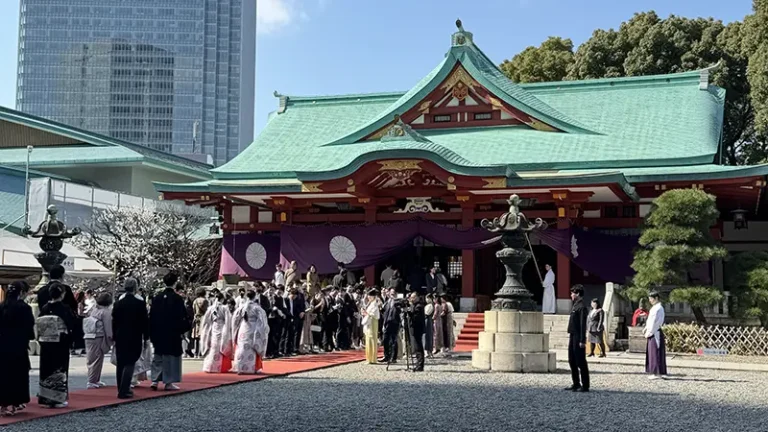
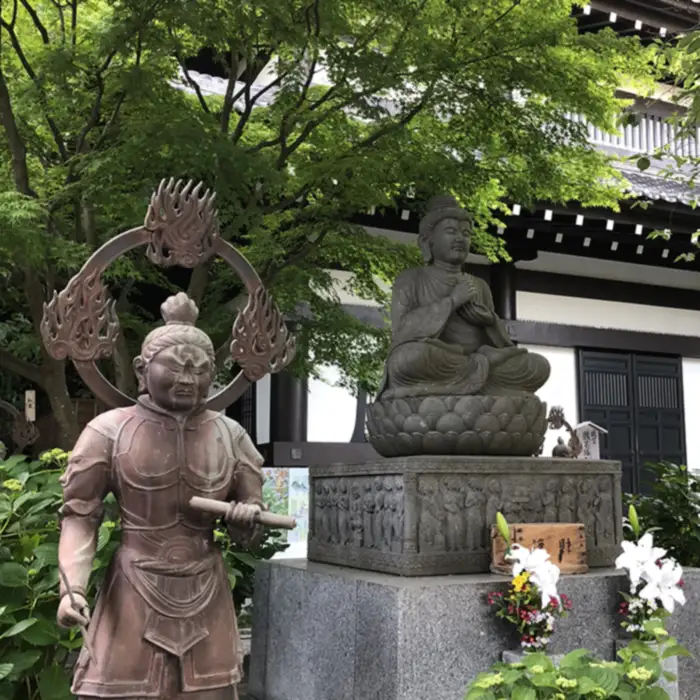
Traditional shrine and temple architecture relies on wood, lacquer, copper, and in some cases kayabuki — thick thatched roofing that requires complete replacement every few decades. Major restoration projects can cost hundreds of millions of yen. Even routine maintenance is expensive.
Repairs are often carried out by miyadaiku — specialist shrine and temple carpenters whose techniques have been passed down through generations. These craftsmen use traditional joinery methods that require no nails, methods that have proven themselves over centuries of earthquakes, typhoons, and fires.
They are not cheap. Nor should they be.
Where Does the Money Come From?
Keeping a shrine or temple going is a financial operation, whatever else it is.
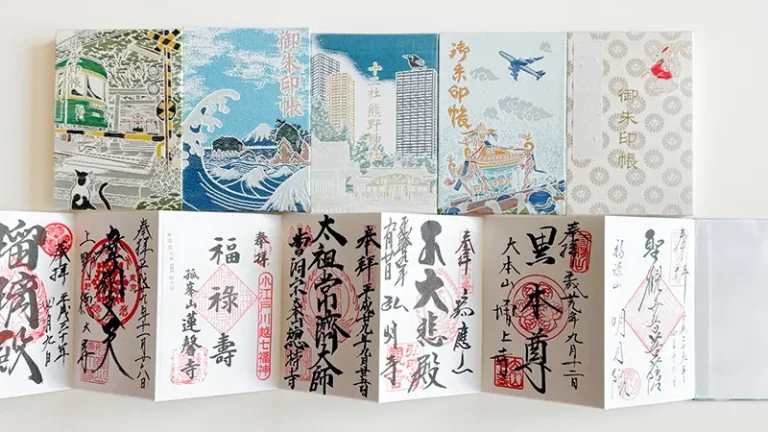
Money comes in from the coins in the offering box, the sale of omamori charms and goshuin stamps, fees for prayers and ceremonies, festival income, parking, and in the case of many temples, from funerals and memorial services.
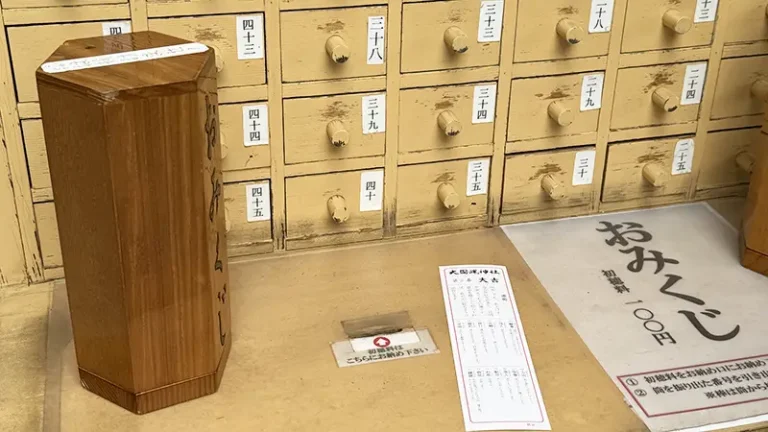
The small fees paid for drawing fortune slips are also a vital part of keeping these sacred spaces running. If you’ve ever wondered how these traditional fortunes actually work, you can explore it here: The World of Omikuji: What Happens When You Draw a Bad Fortune.
Buddhist temples often have a danka system — a network of parishioner families who have traditionally used the temple for ancestral rites and funerals, providing a degree of ongoing support. Shinto shrines have something similar in the ujiko— local community members connected to the shrine’s deity.
Neither system is as stable as it once was. Japan’s ageing population, declining religiosity among younger generations, and rural depopulation have put pressure on both. Many smaller shrines and temples are struggling. Some have already closed.
So fundraising campaigns — for roof repairs, hall restorations, new torii gates — are not unusual. And visitors, if they choose, can be part of that.
What Is Japanese Temple and Shrine Donation?
Walk through almost any shrine or temple in Japan and you will find names.
Carved into stone lanterns. Engraved on the granite pillars of tamagaki fences. Written on roof tiles, on hanging votive plaques, on painted nōbori banners. Pressed into copper and fixed to walls.
These are examples of hōsan — votive sponsorships or devotional donations — contributions made in exchange for something permanent. The forms vary:
- Votive roof tiles (housan-kawara): copper or clay tiles inscribed with a donor’s name, built into the roof
- Stone lanterns (ishi-dōrō): a classic form of donation, often inscribed with the donor’s name and year
- Granite fence pillars (tamagaki): the stone posts surrounding a shrine’s inner precinct, frequently bearing names
- Torii gates: larger donations; the donor’s name is typically inscribed on the base
- Votive banners (nōbori): fabric banners that line shrine approaches, often sponsored by individuals or businesses
To outsiders, this can look strange — a sacred space covered in names like a wall of advertising. To Japanese visitors, the names are almost invisible. Just part of the landscape.
But look more closely. Some of those lanterns were placed in the Edo period. Some of those pillars were inscribed by people who died a century ago. In a sense, the whole precinct is a long list of people who cared enough to leave something behind.
Why Do People Give?
In Western contexts, charitable donations are often anonymous, tax-deductible, and at arm’s length from the recipient.
Japanese votive donations are almost the opposite. They are personal, visible, and permanent. Your name is literally built into the place.
People give for all sorts of reasons. Faith, certainly. Gratitude for prayers answered. The desire to protect a place that matters. A wish to leave something of yourself — or your family’s name — somewhere it will last.
And sometimes, of course, a five-year-old who just wants her roof tile back.
Buildings Are Lost. The Story Continues.
Japan has a long history of rebuilding.
Fires, earthquakes, wars, typhoons, and time have destroyed countless shrines and temples over the centuries. In Edo-period Tokyo, fire was so common in wooden neighbourhoods that it became part of everyday life — what people once called Edo no hana, the “flower of Edo.” Fire starts. Fire ends. Rebuilding begins. This was less tragedy than rhythm.
Yet destruction was rarely treated as the end of the story.
Buildings were repaired, rebuilt, and restored. Sometimes repeatedly. The shrine or temple standing today is often not a relic preserved intact, but the result of generations choosing, again and again, to keep it going.
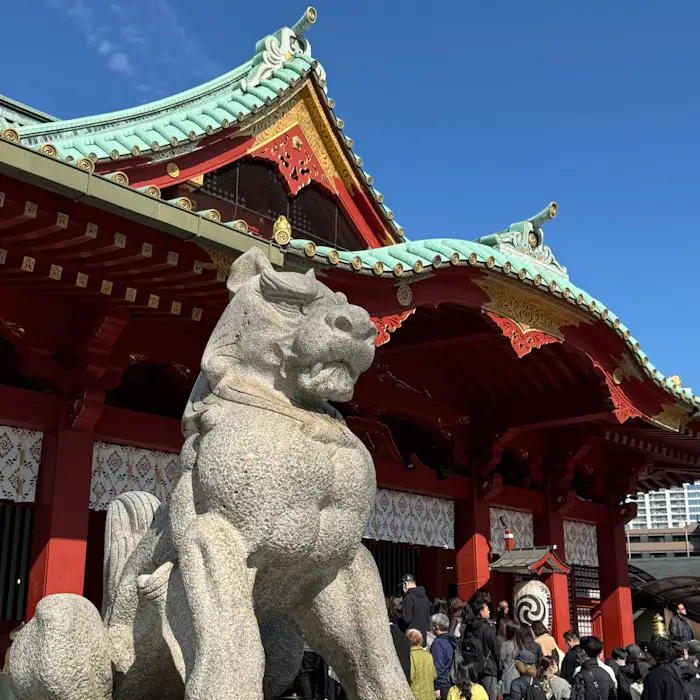
Kanda Myojin in Tokyo offers a clear example. The shrine was severely damaged in the Great Kanto Earthquake of 1923. When it was rebuilt, reinforced concrete was used to make the structure more resilient. Yet the architects carefully recreated not only the appearance of traditional shrine architecture, but also the logic of its wooden construction, even in a building made of reinforced concrete.
In much of Europe, authenticity is tied to original materials — the stone, the timber, the specific wall. In Japan, what gets passed down is more often the form, the technique, the tradition, and the place itself.
The tile in the roof may be new. The act of placing it is the same as it has always been.
The Long Chain of Care
When a shrine or temple announces a fundraising campaign, people still contribute. Not always, not universally, but in enough numbers to rebuild halls, rethatch roofs, and raise new torii gates.
It’s the same thing that’s always happened. Something breaks or wears out or burns down. Someone decides to fix it. Others help. The place continues.
The stone lantern with a name from 1847 and the votive tile inscribed last year are part of the same cycle of care. The names change. The act doesn’t.
I never got my roof tile. But somewhere in Hasedera, in a layer of copper among other layers of copper, is my name. It has been there for decades. It will probably outlast me.
My father knew what he was doing. I was just a little slow to understand.
These days, I find myself doing much the same thing.
Somewhere, someone who hasn’t been born yet will one day write their name on a tile. They won’t think much of it. But the place will still be standing.