The Great Buddha I Flushed Down the Toilet: A Guide to Japanese Omamori
When I was about ten years old, my family visited Kamakura.
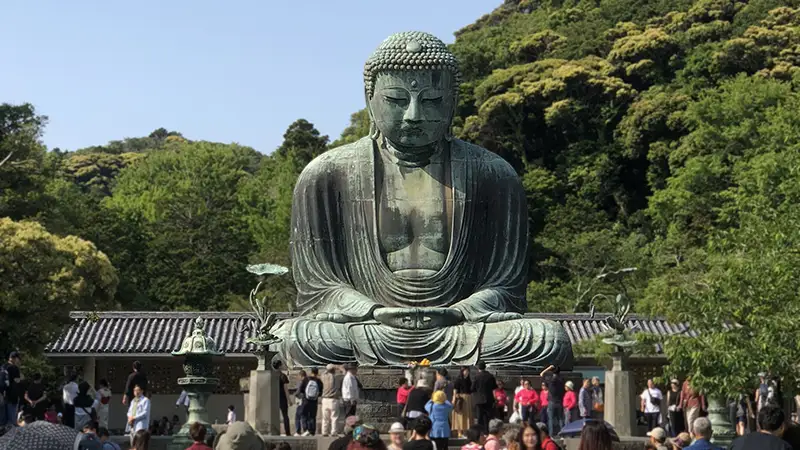
We went to Kotokuin — the temple famous for its Great Buddha, a massive bronze figure sitting serenely in the open air, having long since outlasted the hall that once sheltered it.
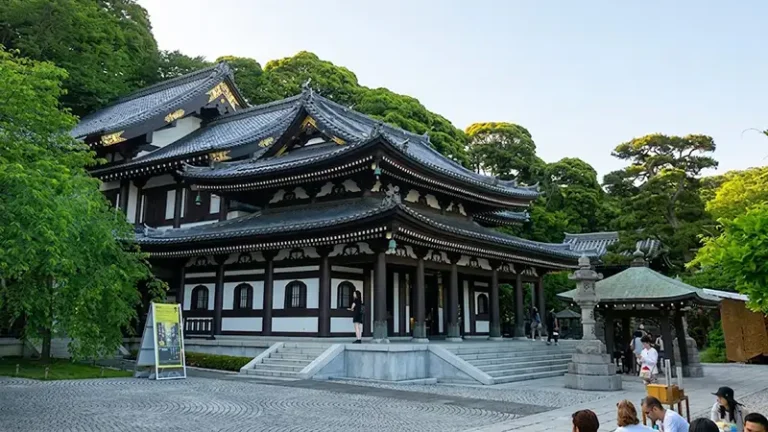
Interestingly, this wasn’t my only memorable childhood mishap in Kamakura; just down the road at Hasedera, I managed to completely misunderstand how temple donations worked—a story I shared in The Roof Tile That Never Came Home: Japanese Temple Donations and How Shrines Stay Standing.
At the amulet counter, I found what I immediately recognised as the perfect omamori.
I begged my parents for it. I got it. For weeks I carried it with me everywhere, examined it constantly, and treated it with the kind of devotion usually reserved for something far more serious.
It was about three centimetres tall and shaped like an inro — a small traditional Japanese container, originally used to carry seals and later repurposed as a medicine case, which by the Edo period had become a finely lacquered decorative accessory worn at the hip. Mine was miniature and when you opened the tiny lid, there was a tiny Great Buddha inside.
I was absolutely in love with it.
One day, wearing dungarees, I tucked it carefully into the chest pocket.
Then I went to the toilet.
I think you can probably see where this is going.
My very precious, very beloved Great Buddha was swept away with the flushing water, never to be seen again.
I cried. Not politely, not quietly. I completely unraveled. The kind of crying where nothing anyone says makes any difference.
Many years later, I came to understand something that would have helped my ten-year-old self considerably.
In Japan, losing an omamori is not simply bad luck. Many people interpret it as yaku ga ochita — the misfortune falling away. The belief is that the charm absorbed a harm that was meant for you. Some shrines even sell omamori specifically designed for this purpose, called migawari mamori — literally, “substitute charms.”
The Great Buddha did not abandon me. He took a hit for me.
This is a comforting thought, and I choose to believe it entirely.
What Is an Omamori?
I should explain, before going further, what omamori actually are — because this matters.
An omamori is not a souvenir. It is not a charm bracelet pendant. It is not merchandise.
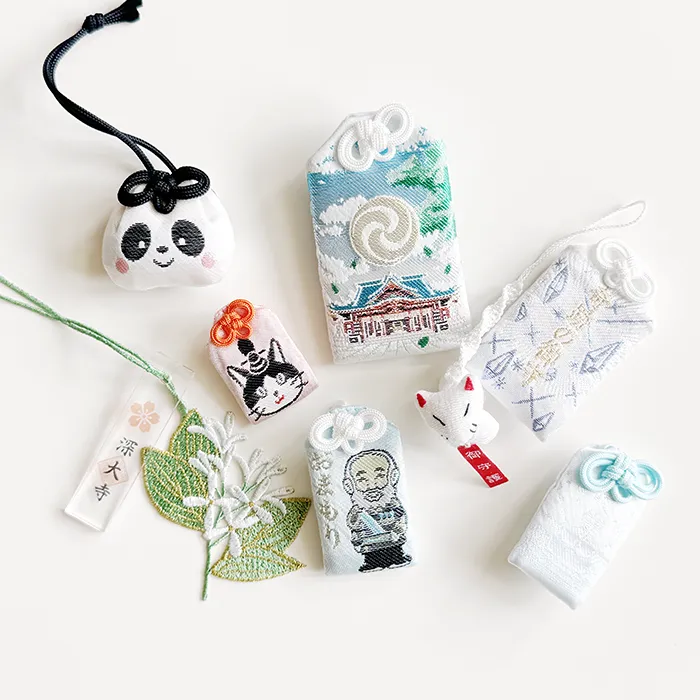
Before the omamori reach the display at the amulet counter, a Shinto priest has stood before the enshrined deity and offered prayers — norito — on their behalf. At Buddhist temples, sutras are chanted. The omamori are considered to carry the protection and blessings of the deity or Buddha they are associated with.
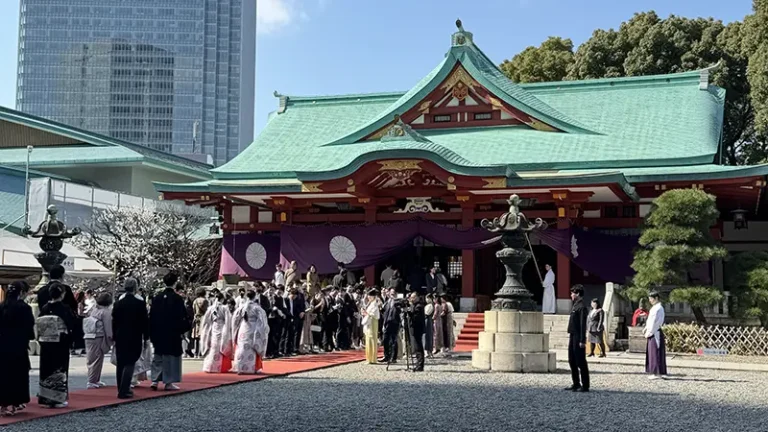
I remember standing at the amulet counter of Kanda Myojin one afternoon when a foreign visitor arrived and asked a shrine maiden to explain what each omamori meant. She went through them one by one: this one for work and success, this one for recovery from illness, this one for finding love.
The same scene plays out at shrines across Japan, increasingly in multiple languages.
I once spotted a woman at an event in the United States with a Fushimi Inari omamori attached to her backpack. I owned the same one. I thought about saying something, but I am shy, so I didn’t. I just noticed.
What’s Inside?
Most omamori are small fabric pouches. Inside is something called a naifu — typically a small piece of paper or a thin wooden tablet inscribed with prayers or sacred text.
You are not supposed to open the pouch.
I was told from an early age that opening an omamori cancels its power. I have never opened one. I pass this information along to you.
A small aside about the envelope.
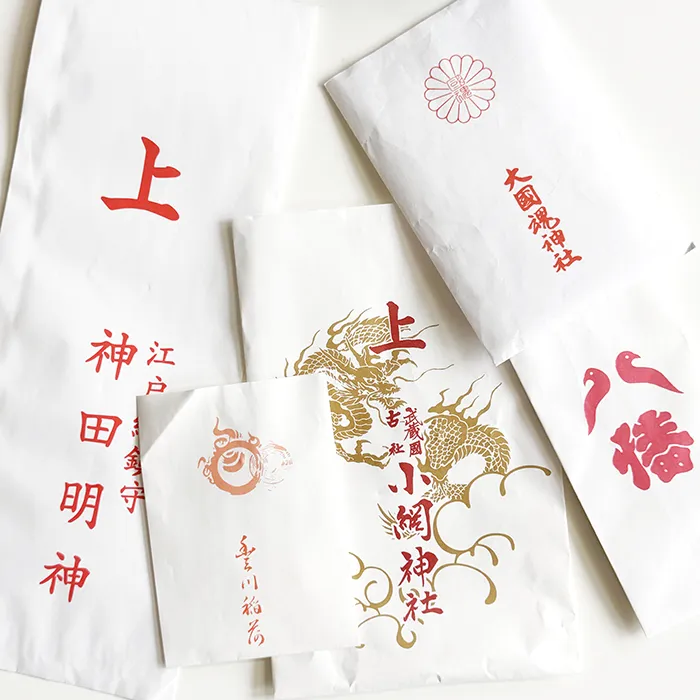
Omamori are often placed inside a small white paper envelope before being handed to you. Many people in Japan hesitate even over how to handle it, treating it as something not entirely ordinary.
Shrines and temples themselves generally say the envelope may be discarded — the sacred element lies in the omamori itself, not its packaging. But the character often printed on the envelope, sometimes read simply as “above,” carries a quieter meaning. It suggests something that has been placed before the divine: an object already offered in the presence of the gods. Even the red ink used for such markings is not merely decorative. It is traditionally associated with protection and purity.
Knowing this, I tend to keep the envelope a little longer than necessary.
The inro-shaped Great Buddha omamori, I should note, was a special case — a charm where opening the container was part of the design. This is presumably why a ten-year-old found it so appealing. It was the one omamori in Japan specifically designed to be opened.
That particular charm from Kotokuin is no longer in production.
How Long Should You Keep One?
Shrines and temples generally recommend renewing your omamori after about a year. The idea is that the protective power (go-riyaku) diminishes over time, and it is better to return the old one and receive a fresh blessing.
Some people replace theirs every six months. Others hold on to them longer.
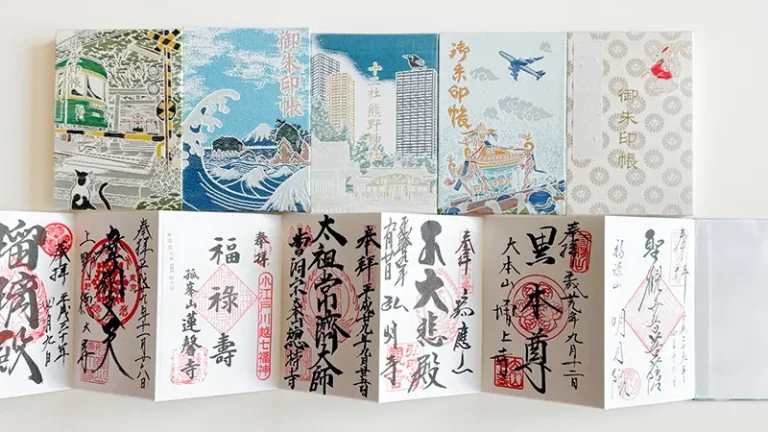
I am, by my own assessment, a collector. When I return to Japan, I walk through shrine and temple grounds and find myself drawn to the amulet counters in a way I cannot entirely explain. Interesting designs. Unusual shapes. Deities I have not encountered before. This same deep pull toward collecting beautiful records of my visits is also what got me swept up in Japan’s massive stamp phenomenon, which began with a very special rabbit shrine. You can read about that journey here: What is Goshuin? The Ultimate Guide to Japan’s Sacred Ink Stamps
Certain omamori I have absolutely no intention of returning. What if this design is retired? What if I never see it again? I cannot take that risk.
As it happens, some designs are indeed retired. I still have omamori that are no longer produced. The ones I kept, I kept correctly.
On Money and the Sacred
There is one more thing worth knowing, which has less to do with the omamori itself and more to do with how things work around it.
Offerings at shrines and temples are still made in cash — electronic payments are generally not accepted. When receiving an omamori at the amulet counter, it is considered good practice to have the exact amount ready, or close to it. Presenting a large bill that requires significant change is not wrong, but arriving with the right amount ready is a small gesture that tends to be appreciated.
The same applies when placing coins in an offering box. The idea is not about the sum — it is about arriving prepared, without requiring much to be undone.
Placing money directly on top of sacred objects — such as setting coins on an omamori at the amulet counter, rather than placing them in the designated box — is considered inappropriate. Large bills that require excessive change are similarly avoided, not because they are unwelcome, but because the moment is meant to remain simple.
This is less about practicality than about something harder to name. A sense that the everyday and the sacred should not collide without ceremony. That a boundary exists between the two worlds, and that crossing it requires a certain care.
The envelope around an omamori. The way coins are placed, not dropped. The return of a charm rather than its disposal. These are all expressions of the same instinct: that sacred things are handled through boundaries, not handed around carelessly.
What makes this interesting is that even when official explanations say something is ordinary, people do not always experience it that way.
Shrines will often say the envelope can simply be thrown away. There is no ritual requirement to keep it, and no rule that demands reverence.
And yet, many people hesitate anyway.
They pause for a second longer than necessary, as if deciding how to let go of something that has already been held with care.
Returning an Omamori
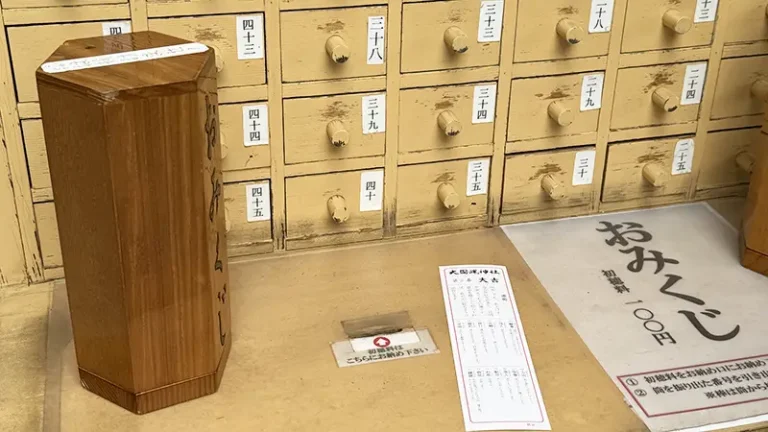
When the time does come to return an omamori, the proper etiquette is to bring it back to the shrine or temple where you received it. Most have a designated return area called a ko-satsu osame-sho (古札納所) — a place set aside for returning old sacred items.
If returning to the original location is not possible — you visited a shrine in Kyoto but live in London — many larger shrines have a ko-satsu osame-sho as well, though it’s worth checking in advance if you’re making a special trip for that purpose. Kanda Myojin in Tokyo and Toyokawa Inari Tokyo Betsuin in Akasaka both accept returns year-round.
One rule that matters: shrine omamori go back to a shrine. Temple omamori go back to a temple.
The worlds of Shinto and Buddhism are separate, and the appropriate destination for each is different. This is not a minor point.
In Japan, returning an omamori is not simply disposal. It is a way of acknowledging that something has already carried what it needed to carry.
Most shrines and temples have an offering box nearby when you return an omamori. The money placed there is not a payment. It is closer to a gesture of thanks — a way of acknowledging the return itself.
The same sense appears again and again: in how things are offered, how they are returned, and how boundaries are quietly maintained.
At the time, I didn’t understand it. But perhaps he went down carrying everything I could not yet name.
What You Should Never Do
Do not put an omamori in the bin.
I am saying this clearly because it needs to be said. An omamori is a sacred object that has been ritually blessed. When it is no longer needed, it deserves a respectful return, not a trip to the rubbish.
If you have carried one home from Japan and are now wondering what to do with it years later, the answer is not the bin. Find a local Japanese cultural organisation, a Japanese shrine or temple if there is one near you, or research whether your original shrine accepts returns by post.
A Note on My Own Collection
I have omamori from many shrines and temples. Some have been with me for years. When I eventually return to Japan, I intend to make the rounds and return what I can.
If I run out of time before I manage it, my instructions are clear: they go in the coffin with me.
One final thought. The Great Buddha of Kotokuin has been sitting outside, exposed to the elements, since the hall that once enclosed him was destroyed centuries ago — swept away, according to popular tradition, by storms and water. Historians debate the details. But the statue remains. For nearly eight centuries, it has sat there through rain, wind, earthquakes, wars, and whatever else history cared to throw at it.
He seems to be handling it better than I did at ten. Perhaps — I like to think — that is what he was there for all along.