The World of Omikuji: What Happens When You Draw a Bad Fortune
At the computer museum where I volunteer in the United States, there is a shrine.
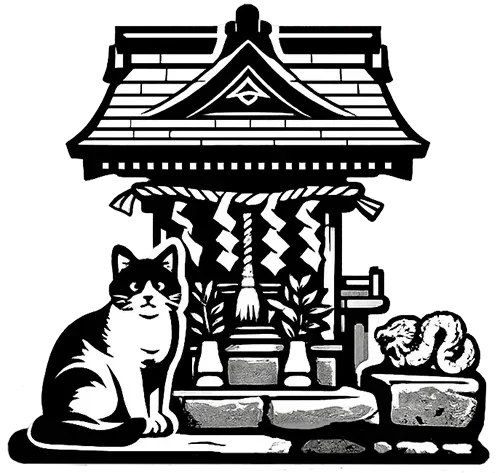
This is not an official shrine, nor is it connected to any religious organisation. It was created by museum volunteers and is dedicated to a fictional deity — Misoroku-no-Mikoto, the patron kami of 36-bit computers. His messengers are a group of sacred rabbits called the Bit Rabbits.
Yes, I realise how that sounds.
Beside the shrine sits a gacha machine. Inside are omikuji — the fortune slips commonly found at shrines and temples throughout Japan. At events, I also set out a cardboard box with custom-made fortune slips. I designed them myself, following the Japanese format: great blessing, blessing, small blessing, uncertain fortune, and so on, all the way down to kyo — bad luck.
What surprised me was not that visitors enjoyed them.
What surprised me was how strongly some people reacted to the results.
One visitor unfolded the paper, frowned, and immediately crumpled it into a ball. Another looked genuinely alarmed. A third told me, with some feeling, that this was nothing like a fortune cookie.
She was right. It is nothing like a fortune cookie. The fortune cookies I remembered usually contained a single, encouraging message. Omikuji are more complicated. The overall fortune is only the beginning. What follows may be encouragement, caution, contradiction, or all three at once.
After watching this happen a few times, I began making small adjustments. Some fortunes were rewritten, some of the harsher wording was softened, and I reduced the number of bad-luck slips. For those who still drew kyo, I put up a notice offering a small lucky charm to help turn the fortune around. I had read about a shrine in Yokohama that does something similar, and I borrowed the idea.
Charms have a funny way of working in Japan; we often believe they protect us by taking the hit for our misfortune. In fact, it took me losing a very precious childhood charm to truly understand this—a story I wrote about in my guide: The Great Buddha I Flushed Down the Toilet: A Guide to Japanese Omamori
It worked. People who drew bad luck and received the charm left smiling. The revised fortunes seemed to be received more warmly as well. That was worth more than the bad fortune ever could have been.
Growing up with omikuji in Japan, I never questioned the presence of bad outcomes. They were just part of the range.
What is an Omikuji?
Omikuji are paper fortune slips drawn at shrines and temples throughout Japan. The word is written おみくじ(御神籤) — literally, a sacred lot.
The range of fortunes typically runs from dai-kichi (great blessing) at the top, through various gradations of blessing and mixed fortune, down to kyo (bad luck). The exact gradations vary between shrines and temples.
The slip usually includes more than a single word. Most omikuji also contain short texts covering different areas of life: health, study, work, travel, relationships, and so on. The overall fortune and the individual sections do not always tell the same story — you might draw a middling fortune overall while receiving an encouraging message about love, or vice versa.
Many shrines and temples actively encourage visitors not to focus too heavily on the overall fortune category. The message, they suggest, is often found in the individual sections rather than in the label at the top.
Where Does the Practice Come From?
One figure often associated with the origins of omikuji is Ryōgen (912–985), a Tendai Buddhist monk later known as Ganzan Daishi. According to tradition, he received one hundred sacred verses through prayer to Kannon, the Bodhisattva of Compassion. These verses became the foundation for what would eventually develop into the omikuji tradition. The numbered fortune-drawing system familiar today took its current shape during the Edo period (1603–1868).
Omikuji are believed to have originated in Buddhist temples. Before the Meiji period, however, Shinto shrines and Buddhist temples were often closely intertwined — a system known as shinbutsu-shugo, the fusion of kami and Buddhas. After the Meiji government formally separated Shinto and Buddhism, shrines developed their own omikuji traditions. Today, drawing omikuji is common at both shrines and temples throughout Japan.
Not Just a Fortune
Here is something worth understanding before you draw.
In Japan, people don’t really see omikuji as random predictions. At a shrine, the slip is believed to carry a message from the kami. At a temple, it comes from the Buddha or bodhisattva enshrined there.
Which means that a bad fortune is not a curse. It is closer to a caution. When you draw kyo, the understanding is that the kami is saying: your energy is low right now. Pay attention. Be careful.
This year, at Jindai-ji Temple in Tokyo, I drew kyo twice in a row on New Year’s Day. Both slips contained the same warning, repeated three times across different sections: be careful of fire.
I assumed this meant the stove. I became meticulous about gas burners. I watched the kettle.
It was not the stove.
I ate a bowl of pasta while it was far too hot, burned the inside of my mouth badly enough to form blisters, and then — in a decision I cannot fully explain — used a water flosser to deal with the blisters, which made everything considerably worse. Three months later, I am still not fully recovered.
I later wondered if this was less about kitchen fires and more a reflection on the particular kind of carelessness I have always had with hot things in general.
What to Do With Your Omikuji
After drawing your fortune, you generally have two choices: you can either leave it at the shrine or temple by tying it, or take the slip home with you.
Most people tie their omikuji at the shrine. Most grounds have a designated tying area — a rack or stand specifically for knotting omikuji slips. Tying a slip is traditionally associated with hoping for a good fortune to come true, or with leaving behind a bad one.
You may sometimes see omikuji tied to tree branches in the grounds. This practice is generally discouraged by shrines and temples — it damages the trees, and it disrupts the appearance of the grounds. If you want to leave yours, please use the designated tying area.
Some people keep their omikuji — in a wallet, a notebook, or somewhere they will see it. I keep mine in a dedicated omikuji notebook, which I find useful for looking back on later.
My own approach: I leave kyo at the shrine. Everything else comes home with me.
Shrines and Temples Draw Differently
Omikuji at shrines and temples are not quite the same.
Temple omikuji, in general, tend to be more direct — sometimes bluntly so. The bad-luck rate is said to be higher at temples, and the wording can be noticeably sharper. Asakusa Temple in Tokyo is well known for its high proportion of difficult fortunes.
At shrines, the numbers vary. Tsurugaoka Hachimangu in Kamakura is famous for a high rate of kyo. I once went there with a friend. She drew dai-kyo — the worst possible fortune — and I laughed out loud, teasing her. Then I opened mine. It was a kyo. Karma came for me instantly.
Tsurugaoka Hachimangu has a special box for returning bad-luck fortunes. Placing a kyo slip inside is said to transform the bad fortune into good luck.
My father, for reasons that remain unclear, drew kyo with unusual frequency. He was the kind of person who would draw again if he disliked the result. Four consecutive bad-luck slips was not unheard of for him. I have also been known to draw twice — if kyo appears, I tell the kami politely that I would appreciate the chance to try again, and then I try again. Once. That is my limit.
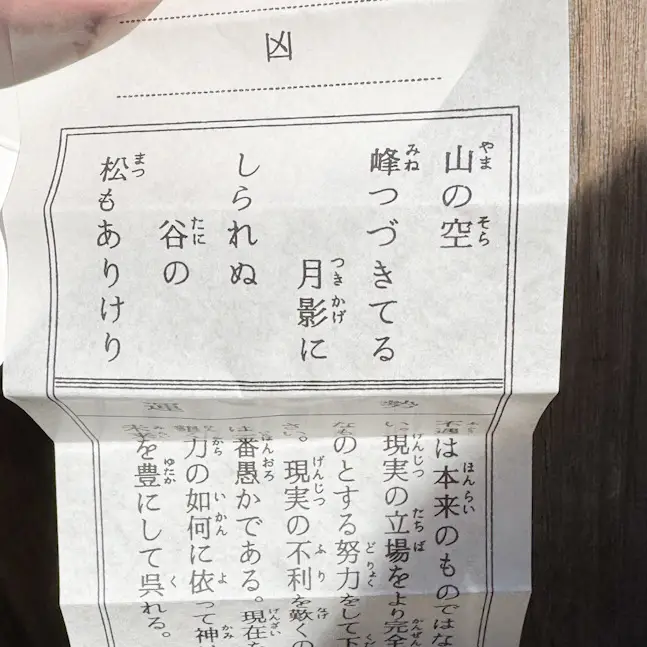
How to Actually Read One
At events, I am sometimes asked by American visitors: how do you read this?
I had never been asked that question before. It surprised me more than I expected — not because the question was strange, but because I had never once wondered about it myself. You grow up drawing omikuji, you open the slip, you read it. It had never occurred to me that there was a “how.”
Thinking about it now, I suspect the confusion comes from a difference in expectation. Western reading tends to assume that important information is at the top, that there is a main message, that one sentence carries more weight than the others. Omikuji do not quite work that way. The overall fortune is listed, but the sections that follow — health, travel, work, relationships, study — are not really subordinate. They are more like different angles on the same question.
One way to think of it: reading a Western text is a bit like reading a book with a clear heading structure. Reading an omikuji is more like a bundle of papers that shift in the wind, where the centre changes depending on where you stand.
Here is what I actually do.
I look at the overall fortune first — great blessing, blessing, and so on down to bad luck. I let myself feel the immediate reaction, whatever it is.
Then I look for the sections that are most relevant to what I have been thinking about. If I was wondering about work, I read that section. If health has been on my mind, I read that one. I do not feel obliged to read every line with equal attention.
If the fortune is not what I hoped for, I try to take it as information rather than verdict. This is the current state of things. This is what the kami sees right now. The appropriate response is not to be discouraged, but to be attentive — to be a little more careful, a little more thoughtful, and to keep working toward what matters.
If the fortune is encouraging, I try not to relax too much. It is a sign to keep going, not a reason to stop.
The point is not to passively receive what the omikuji says. It is to take the message seriously enough to act on it.
How to Approach It
There is no fixed rule about how to draw omikuji, but for those who take it seriously, there is an intention behind it.
My own approach is to stand near the omikuji area, which is usually close to the main hall, and speak inwardly to the kami before drawing. Something like: please send me a message. If there is something specific I am wondering about — a decision, a situation, a question I am carrying — I will hold that in mind as I draw.
This is not required. Many people treat omikuji lightly, and that is fine too.
But if you are asking the kami for something, it helps to actually ask.
The Different Types
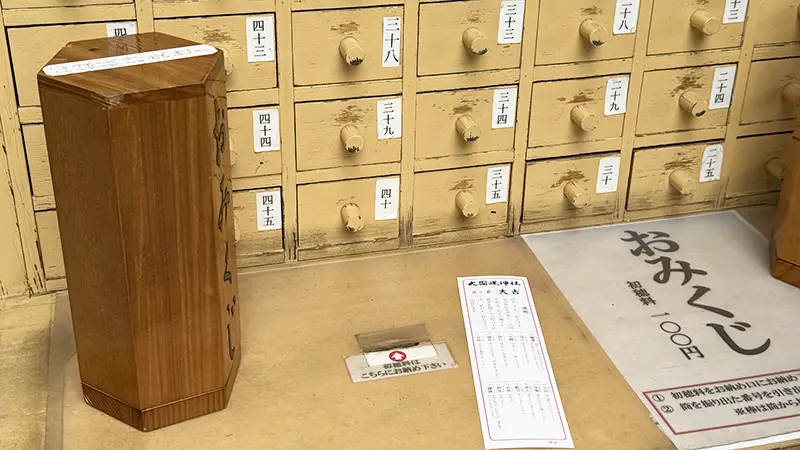
The most common type is bo-mikuji — a cylinder containing numbered sticks. You shake the cylinder, allow one stick to emerge, note the number, and find the corresponding slip from the numbered box or rack nearby.
The second common type is a box of folded slips from which you draw one.
Beyond these, there is considerable variety.
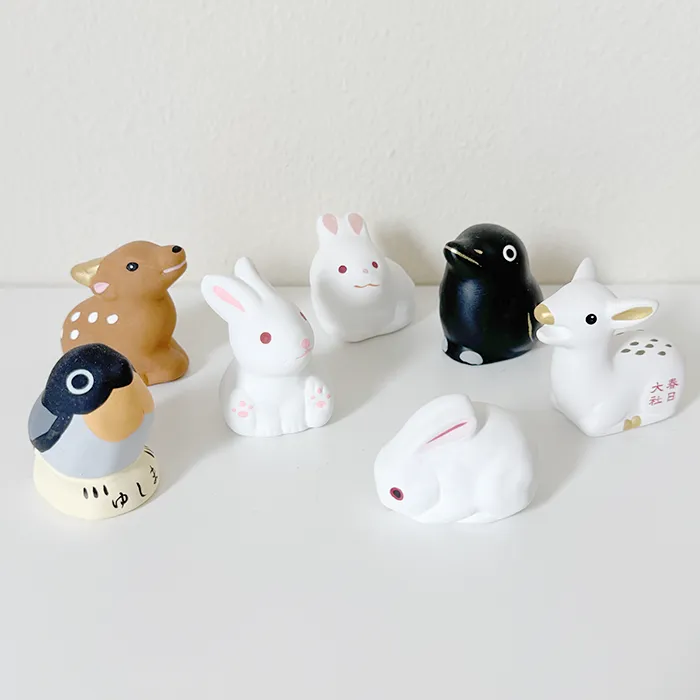
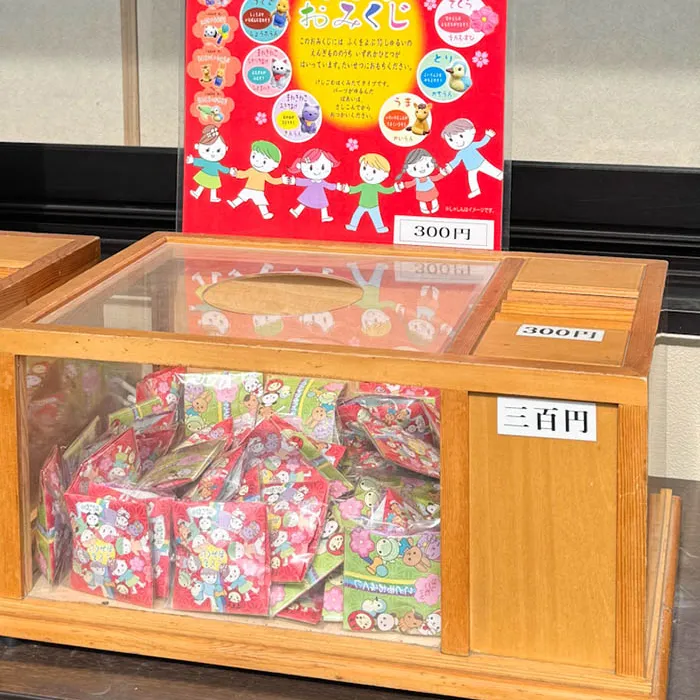
Some omikuji slips are inside small figurines, with the fortune tucked into a hollow at the base. These make appealing keepsakes — and if you find a design you like, you may find yourself drawing just to get the figurine, a slippery slope I know all too well from personal experience.
Most omikuji are drawn on an honour system — there is no attendant checking whether you have paid. The fee is typically around 200 yen for a standard slip, and around 500 yen for figurine-style omikuji. Visitors are expected to leave the payment in a small box near the omikuji area. Please have coins ready, and please pay.
At some shrines and temples, there are water omikuji: the slip appears blank until placed in water, at which point the text gradually appears. There are vending machine omikuji. There are automated shrine lion (shishi) figures that hold the rolled slip in their mouths and extend it to you mechanically.
Japan continues to find new ways to deliver old messages.
Some shrines now offer omikuji in English. I once watched a visitor at my local shrine who did not speak Japanese use a translation app to read their slip slowly and carefully, working through each section. The fortune was in Japanese. The attention to it was universal.
A Note on What Comes Inside
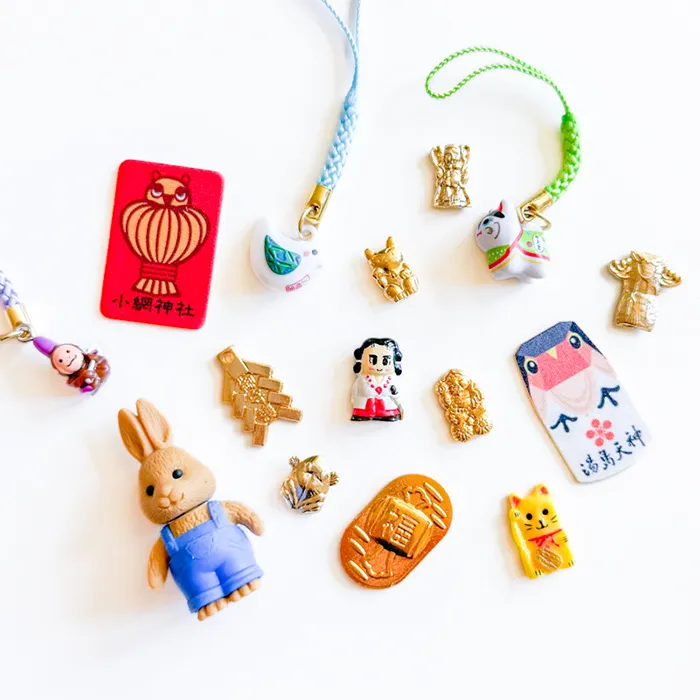
Some omikuji include a small lucky charm alongside the slip — a tiny mascot, a small figurine, something small enough to carry. These are not toys or souvenirs. Like omamori, they have been received as part of a sacred context and deserve corresponding respect.
Many people keep small figurines in a coin purse or small pouch. They are easy to lose. They have a habit of vanishing quietly at some point without explanation.
If yours disappears, consider the possibility that it has done its work.
Shichimi.org explores Shinto, sacred spaces, and Japanese spiritual culture for curious readers around the world.