What is Goshuin? The Ultimate Guide to Japan’s Sacred Ink Stamps
For about six years, I did not return to Japan.
My rabbit — a Holland Lop named Plopp — was in poor health for much of his life, and I stayed close to home to look after him. He lived to nearly thirteen. During those years away, the Great East Japan Earthquake happened in 2011, and Japan moved through its long recovery. Life continued without me.
While I was away, I kept reading about goshuin from time to time. Over the years, my understanding slowly deepened.
I had heard the word before, but it had always seemed like something for serious pilgrims, not for ordinary visitors like me. I genuinely was not sure whether it was appropriate for an ordinary person to receive one. Reading about it convinced me it was.
So when I finally returned to Japan, I was prepared. My first goshuin was received at Tsuki Shrine in Saitama — a shrine famous for its connection to rabbits — where I also purchased my first goshuin book. It felt like the right place to begin.
A nationwide goshuin boom had arrived while I was away. It turned out I had come back at exactly the right time.
What Is a Goshuin?
A goshuin is a stamp and calligraphic inscription given at shrines and temples as a record of worship.
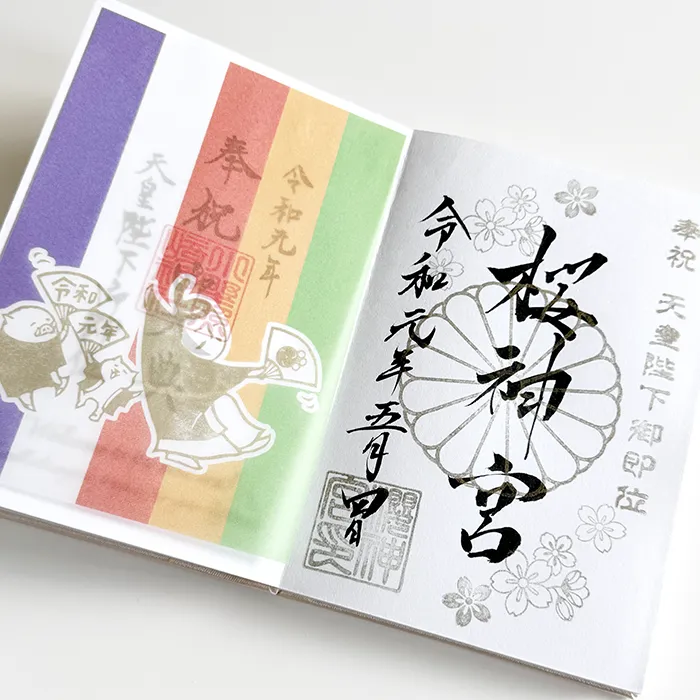
At most shrines, the calligraphy typically includes the shrine’s name, the date of worship, and one or more ink stamps. At temples, it may instead feature the name of the principal Buddha, bodhisattva, or deity associated with the temple.
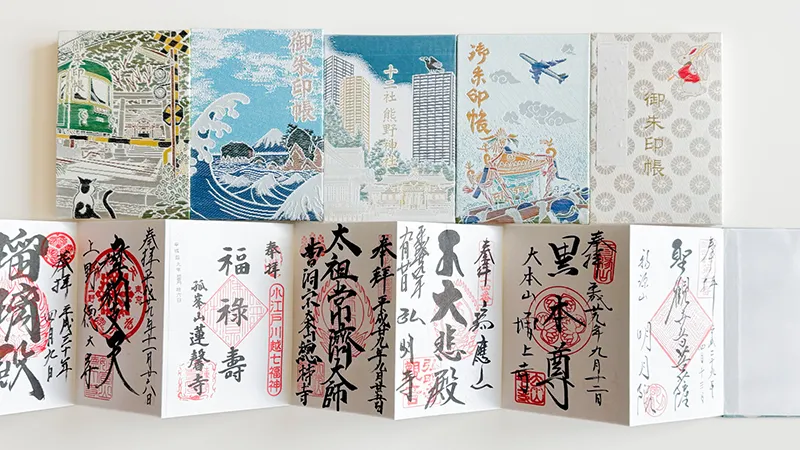
They are written into a goshuin-cho — a dedicated accordion-folded book, usually with a decorative cover, kept specifically for this purpose.
Where Does the Practice Come From?
The origins of goshuin are debated. Some scholars trace roots back more than a thousand years, but the tradition as it is generally understood today is associated with pilgrimage culture that developed around the Kamakura period — roughly 800 years ago.
Originally, the practice was connected to the offering of hand-copied Buddhist sutras to temples. The marks and inscriptions received were proof of that offering. Over time, the sutra copying fell away for most visitors, but the record itself continued.
I find something quietly moving in that. The form survived long after the original practice changed, Which perhaps says something about how traditions work — they shift, adapt, and carry a residue of meaning forward even when the original context has faded.
Traditionally, a goshuin is received as a record of worship after visiting a shrine or temple — after offering your respects, not before.
The Boom, and What Came After
Until around the 2010s, goshuin collecting was relatively quiet — known to those who sought it out, but not something most Japanese people thought about every day.
Then something shifted. Temples and shrines began offering seasonal and limited-edition goshuin — elaborate designs tied to festivals, to specific times of year, to the particular character of a place. The books grew more beautiful. The stamps grew more intricate. Photographs appeared online. A boom followed.
At its peak, it was not unusual to wait an hour or more to receive a goshuin at a popular shrine. I remember long queues forming around the time of the Imperial succession in 2019, when Emperor Akihito abdicated and Emperor Naruhito ascended to the throne. That particular goshuin — with the date of the new era — became something people actively sought out.
After the COVID-19 pandemic, many shrines and temples shifted to offering pre-written goshuin sheets to reduce direct contact. Paper-cut designs, embroidered versions, and elaborate seasonal artworks became increasingly common. The cost also rose — while a standard goshuin has traditionally cost around 300 yen, 500 yen is now common at many shrines and temples, and special editions can cost 1,000 yen or more.
How I Changed My Own Practice
I collected goshuin for several years with some enthusiasm. But gradually I found myself slowing down.
The queues were part of it. Standing in a long line at a crowded shrine felt at odds with what I was there for. The rising costs were another factor. But more than anything, I realised I had already found the shrines and temples that mattered most to me.
I still receive goshuin, but selectively now — at the places I return to regularly, the ones where something genuine is exchanged in the act.
My father used to enjoy looking through my goshuin book. He never commented on the stamps themselves. Instead, he would look at the calligraphy and remark on the strength of the strokes, the balance of the characters, the quality of the brushwork. It was a reminder that goshuin have always been something more than records of visits. They are also examples of traditional calligraphy — written by a human hand, on a particular day, in a particular place.
He always had a unique way of looking at these sacred items. While he admired the brushwork of my stamps, he had a much more chaotic relationship with fortune slips—often drawing bad luck multiple times in a row, a habit I explore in The World of Omikuji: What Happens When You Draw a Bad Fortune.
How to Receive a Goshuin
Look for a sign marked goshuin (御朱印) near the shrine or temple office, or ask at the reception desk. Open your goshuin book to the page where you would like the inscription written and hand it to the attendant with both hands.
Traditionally, visitors go to the main hall first, offer their respects, and then receive the goshuin on the way out — reflecting its role as a record of worship rather than a ticket or souvenir. At busier temples where writing may take considerable time, you may be asked to leave your book before worship and collect it afterwards.
If you are asked to return later, use the time to walk the grounds and enjoy the atmosphere rather than waiting at the counter.
Two phrases worth knowing: onegaishimasu (お願いします) when handing over your book, and arigatou gozaimasu (ありがとうございます) when receiving it back. A small thing, but genuinely appreciated.
Goshuin Etiquette and Tips
- Bring a goshuin book, or purchase one at the shrine or temple. Writing in a general notebook is considered impolite.
- Prepare the exact fee when possible. A standard handwritten goshuin is typically 300 to 500 yen. Pre-written seasonal or decorative designs, including paper-cut and embroidered versions, often cost 1,000 yen or more. The fee is described as an offering rather than a purchase — many people view it as a contribution supporting the shrine or temple.
- Keep any numbered ticket you receive — you will need it to collect your book.
- Write your name inside the cover to avoid mix-ups with other visitors’ books.
- Not all goshuin are written on the spot. Many shrines now offer pre-written seasonal or limited-edition sheets. These are perfectly valid — don’t be disappointed.
- Consider a folder-style album if you plan to collect special-edition goshuin. Larger decorated sheets or paper-cut designs often do not fit in a traditional accordion-style book.
Is It Still Meaningful?
This question comes up more often now that goshuin collecting has become so widespread.
Some people worry that the practice has become detached from its original purpose — that it is now more about collecting beautiful things than about worship.
I think about this sometimes. But I still remember him turning the pages of my book, pointing to a particularly strong piece of calligraphy, and saying nothing for a moment.
There is something in the act of receiving a goshuin — the waiting, the sitting, the watching someone write your date and the shrine’s name in brushwork you could never replicate — that resists being reduced to mere souvenir collecting. It is a record of a specific visit. A specific moment. A specific hand.
Looking through a goshuin book years later can be surprisingly evocative. Even now, many of the pages bring back memories of specific journeys, conversations, and places. In that sense, a goshuin is not only a record of worship, but also a record of where you have been and what you experienced there.
Whether it means something beyond that is between you and the shrine.