The Empty Space in the Heart of Tokyo: Masakado’s Mound and a Thousand-Year Mystery
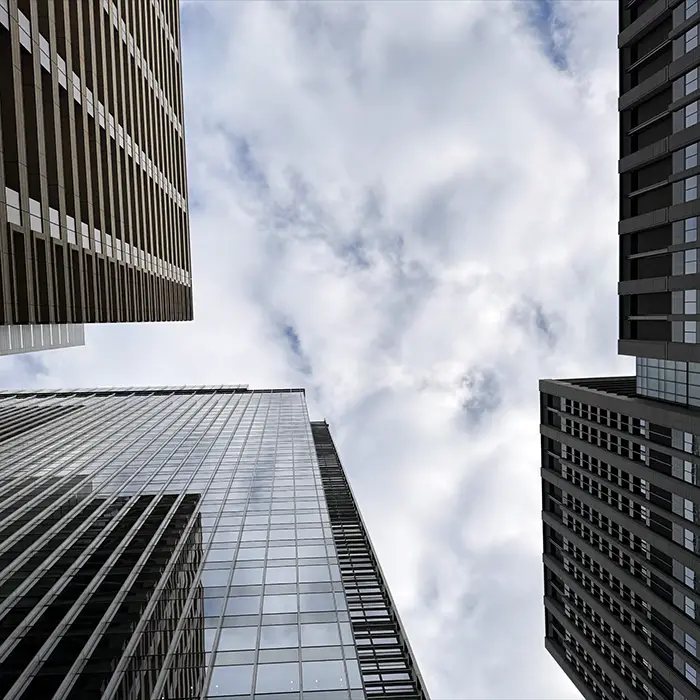
In the centre of Tokyo, in Otemachi — one of Japan’s most expensive districts, in the shadow of the Imperial Palace and surrounded by the headquarters of major corporations — there is a gap.
The land here is among the most valuable in Japan. The site itself is modest in size, but its estimated value runs to several billion yen.
And yet no building stands here.
The city has been remade around this spot countless times over a thousand years. Still, it remains.
The place is known today as Masakado’s Kubizuka (Head Mound), one of Tokyo’s most famous historical and spiritual sites.
What occupies it is a stone marker that looks entirely out of place: ancient, weathered, incongruous against the glass towers on all sides.
The first time I visited, I was a university student with a cancelled class. The mound had a reputation. It was spoken of in the particular tone people use for places like this: not quite forbidden, but not quite safe either. I was curious and genuinely a little afraid. I seriously wondered whether something bad might happen if I went.
The mound was smaller than I expected — old trees, low shrubs, an ancient stone marker in the shadow of glass towers. Corporate headquarters on all sides. The contrast was disorienting, almost unreal.
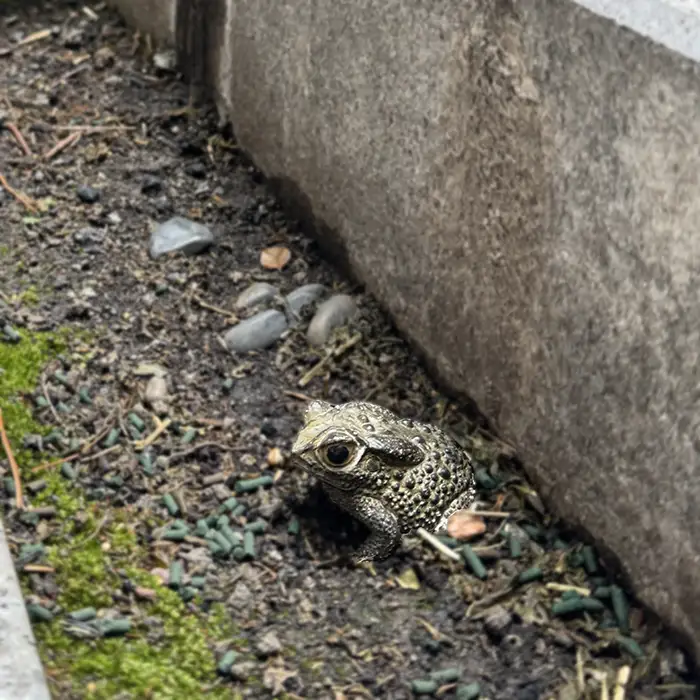
And yet people came. Office workers from the surrounding buildings arrived one after another to pay their respects. Some brought brooms and swept the grounds. Near the base of the mound, small frog figurines had been placed as offerings. Kaeru — the Japanese word for frog — sounds like the word for “to return.” The tradition, I later learned, is that employees transferred away from Tokyo leave a frog here, hoping one day to find their way back to the centre.
Somehow, standing there, I felt this was not a place to visit out of idle curiosity.
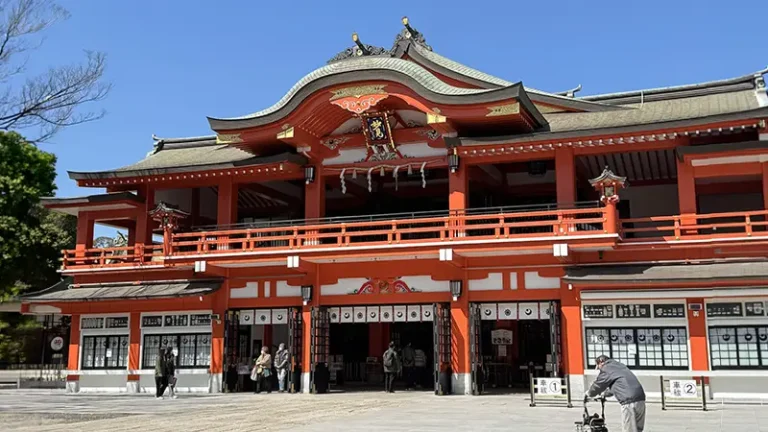
It was only later — much later, after reading a novel about Masakado and beginning to understand who he actually was — that I realised I had already been visiting his shrine at Kanda Myojin without knowing it. The person I had nervously bowed to at the mound, and the deity I had carelessly paid my respects to while larking around with a wooden cutout detective, were the same.
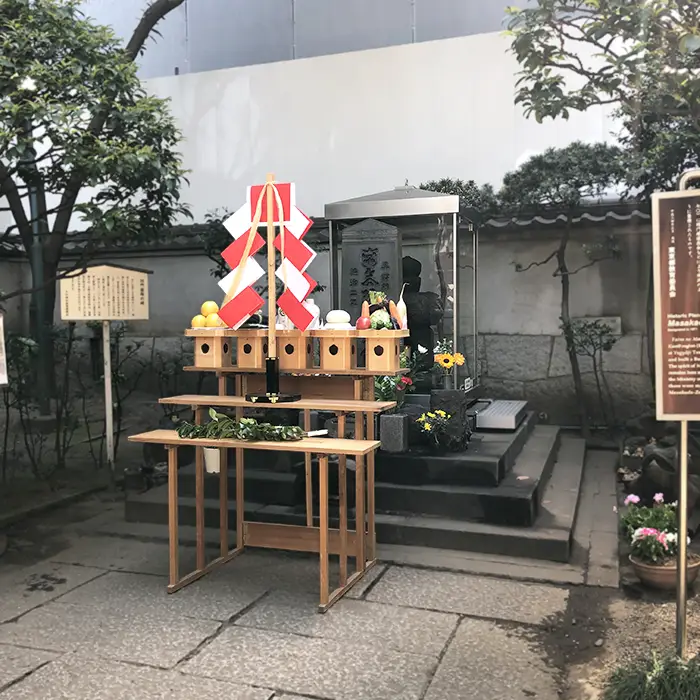
during the Kanda Matsuri in 2019
A Place That Has Survived Everything
Before going back to the beginning of the story, it is worth saying something about what this place has been through.
In 1945, the area around the mound was reduced to rubble by American air raids. After Japan’s surrender, occupation forces requisitioned the land and established a motor pool for military vehicles. Bulldozers were brought in to clear the ground.
One of those bulldozers overturned. The driver was thrown from the vehicle and killed.
Accidents had been occurring in the vicinity even before that — injuries among Japanese labourers working on the site. When the overturned machine was found to have come to rest directly in front of a half-buried stone monument, and that monument was identified as the marker of Masakado’s mound, the situation became, as contemporary accounts describe it, a matter of considerable alarm.
The local neighbourhood association chairman, Endo Masazo, went to GHQ(General Headquarters, the Allied occupation authority) to petition for the site’s preservation. Standing before American officers who had never heard of a tenth-century Japanese warlord, he reportedly described the place as “the grave of an ancient chieftain.” He did not give up. Through persistent appeals, he succeeded in having the demolition plans cancelled.
The mound remained.
This was not the first time it had survived something it should not have. And it would not be the last.
A Mound Before the Mound
This place is known as Masakado’s mound. But its history begins before Masakado.
In the Heian period, this area was known as Shibazaki-mura. The site was already an ancient burial mound — a kofun — predating Masakado by centuries. Someone else was buried here first.
Into this already-sacred ground, in 940 CE, the head of Taira no Masakado is said to have been brought and interred by those loyal to him, following his death in battle and the subsequent display of his head in Kyoto.
Whether the head arrived by supernatural means — flying eastward through the air, as the legend insists, calling out for its body — is a question history cannot answer. What the records confirm is that it came to rest here, at Shibazaki-mura, beside the small shrine that would eventually become Kanda Myojin.
Left Behind
After Masakado’s burial, the mound and the shrine stood side by side for a long time.
Eventually, a wandering monk came through Shibazaki-mura, found both the mound and the shrine in a state of neglect, and restored them. Masakado’s spirit was enshrined in the small shrine beside the mound. That shrine became Kanda Myojin.
Masakado was not enshrined as a deity immediately after his death. It happened generations later.
For hundreds of years after that, the mound and the shrine remained neighbours.
Then, in the Edo period, Kanda Myojin was relocated to its current site — placed deliberately on the north-eastern axis from Edo Castle, to serve as guardian of the castle’s kimon, its demon gate. The warrior who had once defied imperial authority was now being used to protect the shogunate’s seat of power.
The shrine moved. The mound did not.
The mound stayed where it had always been, absorbed into a daimyo estate, passed from lord to lord across the Edo period. After the Meiji Restoration it came under the management of the Ministry of Finance. Shibusawa Eiichi — the industrialist whose face now appears on the ten-thousand-yen note — is said to have intervened to ensure its preservation.
The Great Kanto Earthquake of 1923 partially damaged the site. Then came the war, the air raids, the rubble, the motor pool.
The mound came close to disappearing more than once. Each time, someone stepped in.
Where Is the Head?
This place is called a kubizuka — a head mound. But is Masakado’s head actually here?
There are multiple traditions about where the head ended up. One account holds that the head was brought back from Kyoto, washed in a pool near what is now Otemachi, and enshrined at a small Kannon hall. Later traditions associate this site with the origins of Tsukudo Shrine, which for centuries preserved objects said to be connected with Masakado himself.
Records from Tsukudo Shrine in Kudan state that the shrine once held Masakado’s skull itself among its sacred treasures, along with a portrait and a wooden seated figure. These objects had been passed down for over a thousand years.
In April 1945, Tsukudo Shrine burned. Everything was lost. Only photographs remain.
In Satte City, Saitama, there is a mound said to mark the place where Masakado’s loyal horse carried his head — running eastward, toward the land Masakado had known, until it could run no further.
In Bando City, Ibaraki, the temple Enmyoin is said to hold Masakado’s remains, secretly buried there by his family.
Where is Masakado’s head?
In the end, nobody knows. The mound in Otemachi has never been excavated. It probably never will be.
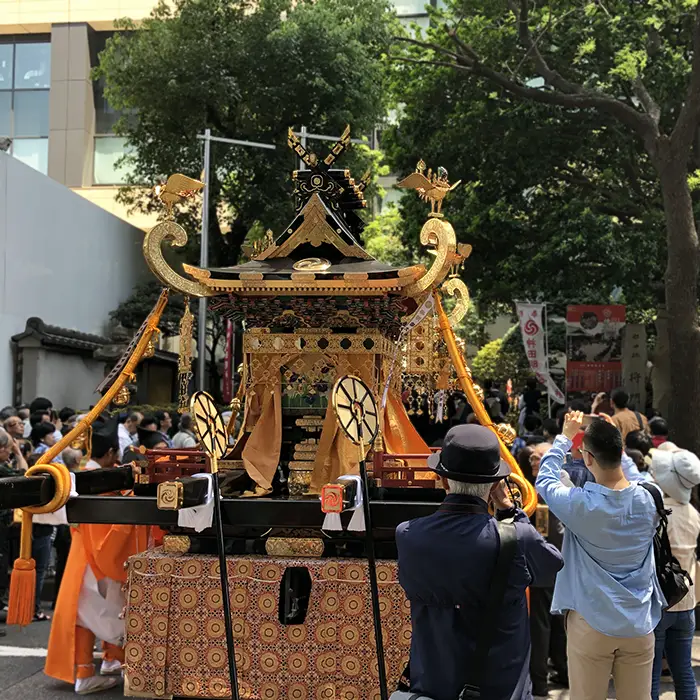
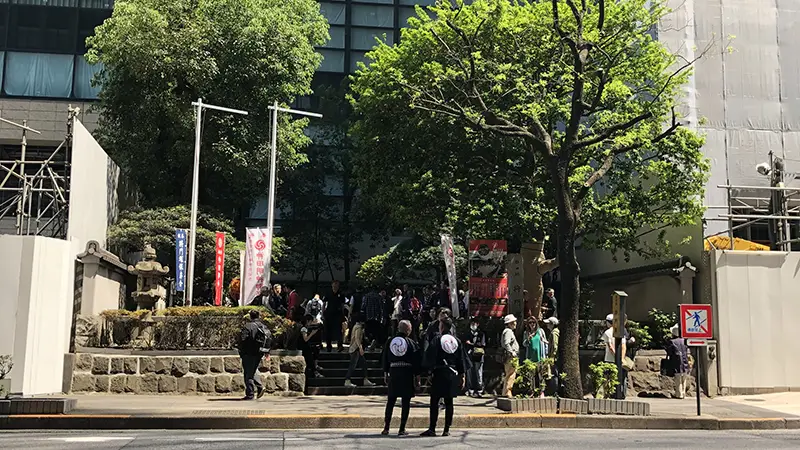
at the Masakado-zuka, during the Kanda Festival, 2019.
The Mound Today
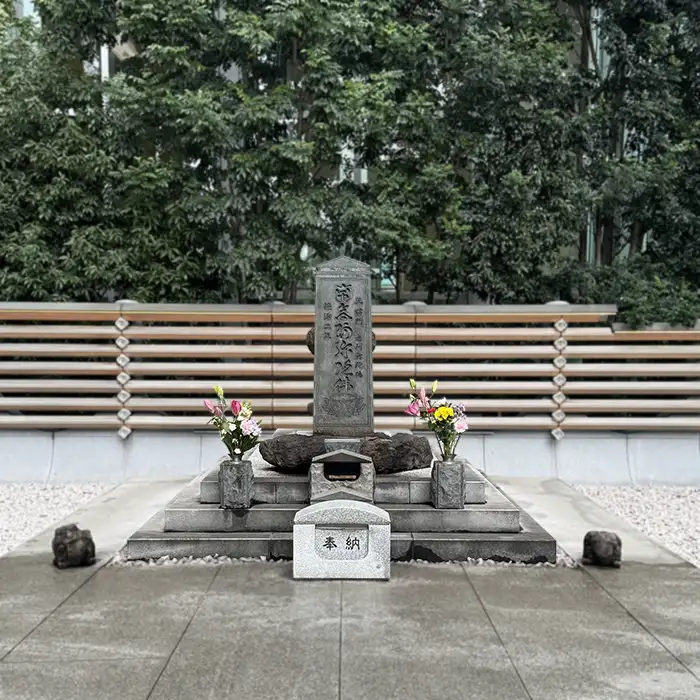
What strikes me most is not the legends, nor the stories of accidents. It is the people. More than a thousand years after Masakado’s death, visitors still approach the mound quietly and respectfully. There is no shrine gate marking the boundary, no priest directing visitors, yet many instinctively bow before entering the grounds. Some come because they admire Masakado, some because they are interested in history, and some simply because they happened to pass by. Whatever brought them there, most seem to sense that this is a place where respect is owed.
That sense of respect is not limited to visitors. It can also be seen in the long effort to preserve the mound itself.
The mound is still protected — by a preservation society established in 1960, now chaired by the grandson of Endo Masazo, the man who faced down GHQ.
The former residence of the Endo family — merchants who had been active in the Kanda timber trade district since the Edo period — was originally built in the early Shōwa era and later relocated to its current site immediately adjacent to Kanda Myojin. The house reflects the refined sensibilities of official purveyors to the shogunate, with carefully selected timbers and finely crafted details. It is now designated as a tangible cultural property of Chiyoda Ward.
The family that saved the mound from the bulldozer lives on, in a building next door to the shrine where Masakado is enshrined.
In 2021, the most extensive restoration to date was completed. The old stone walls, the low shrubs, the tile-roofed earthen wall, the slightly enclosed and shadowed feeling — all of it was opened up and renewed.
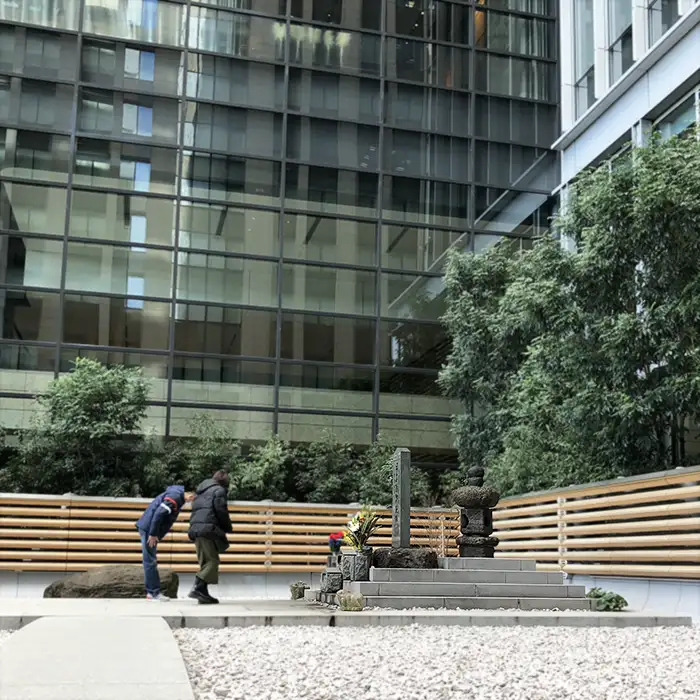
I visit every year, as part of an annual circuit of seven shrines connected to Masakado across central Tokyo. I understand why the restoration was done. The space is better maintained now, more open.
But I miss the old version. The overhanging trees, the narrow enclosed feeling, the slight sense that you were stepping out of the city and into somewhere else. The new mound is cleaner. The old one felt more like a place apart.
The mound itself has not changed. What changed is the frame around it.
The city has rebuilt itself around this spot again and again. And yet the mound has simply remained — in the same place, through everything.
What I find remarkable is not that it survived once. It is that for a thousand years, whenever this place needed protecting, someone appeared to protect it.
Visiting Masakado’s Mound
- Address: 1-2-1 Otemachi, Chiyoda, Tokyo
- Access: A short walk from Otemachi Station (Tokyo Metro) , EXIT C5
- Hours: Open at all times, no restrictions
- Kanda Myojin: Located in Sotokanda, about 30 minutes on foot. The shrine and the mound are separate sites — they have been since the Edo period, when the shrine relocated and the mound stayed behind.
Related Article:
Taira no Masakado: The Warrior Who Became Kami